

Rum
From sugar cane to rum: everything about production, origins and styles.
What is rum?
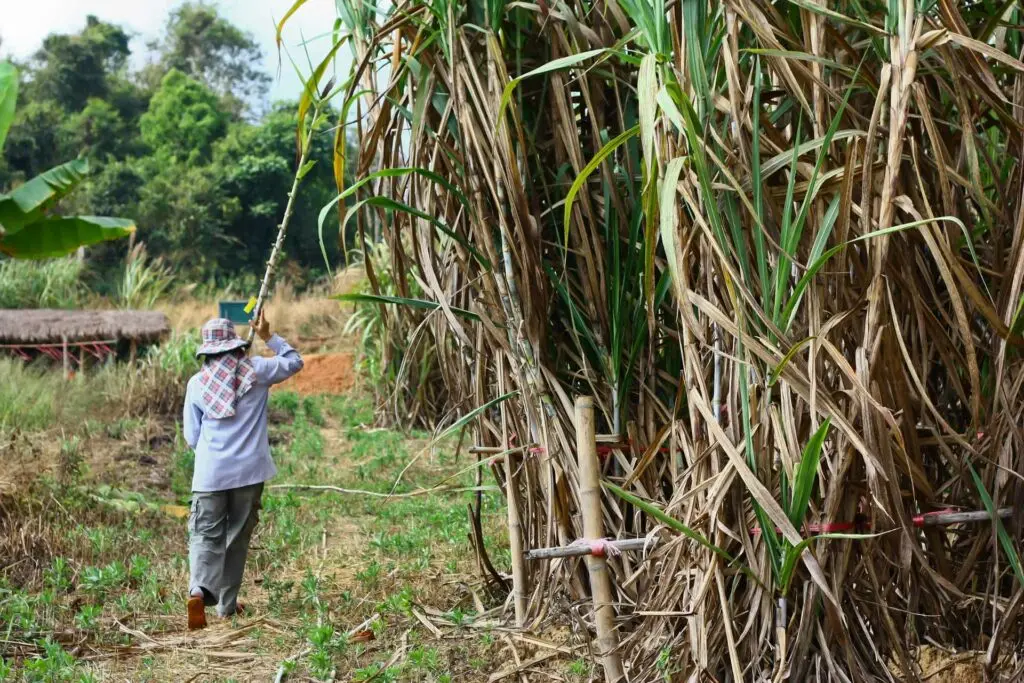
Rum is made from the by-products of sugar cane, mainly molasses, or sometimes from fresh sugar cane juice or sugar cane syrup. Fermentation produces alcohol. Depending on the method, distillation produces a spirit with an alcohol content of 65 to 95 per cent. Rum is usually bottled at around 40%.
Most rums in the shops are blends: different types of rum are mixed for consistent quality and, above all, for a distinctive, recognisable house taste. Most light rum comes from Puerto Rico, most dark rum from Jamaica, Haiti and Martinique.
You can drink rum neat or mixed, for example with cola in a Cuba Libre. Rum is also used in the kitchen, as a raw material in the flavouring, confectionery and food industries, and as a flavouring in the tobacco industry, because other aromas dissolve well in it.
Production
1. Fermentation
The molasses is first diluted with clean water, so that complete fermentation would yield an alcohol content of 7 to 8%. The solution is then fermented. Depending on the method, this takes anywhere from 2 to 12 days.
A slow fermentation produces more higher alcohols and esters than a fast one, and therefore a more aromatic product.
2. Distillation
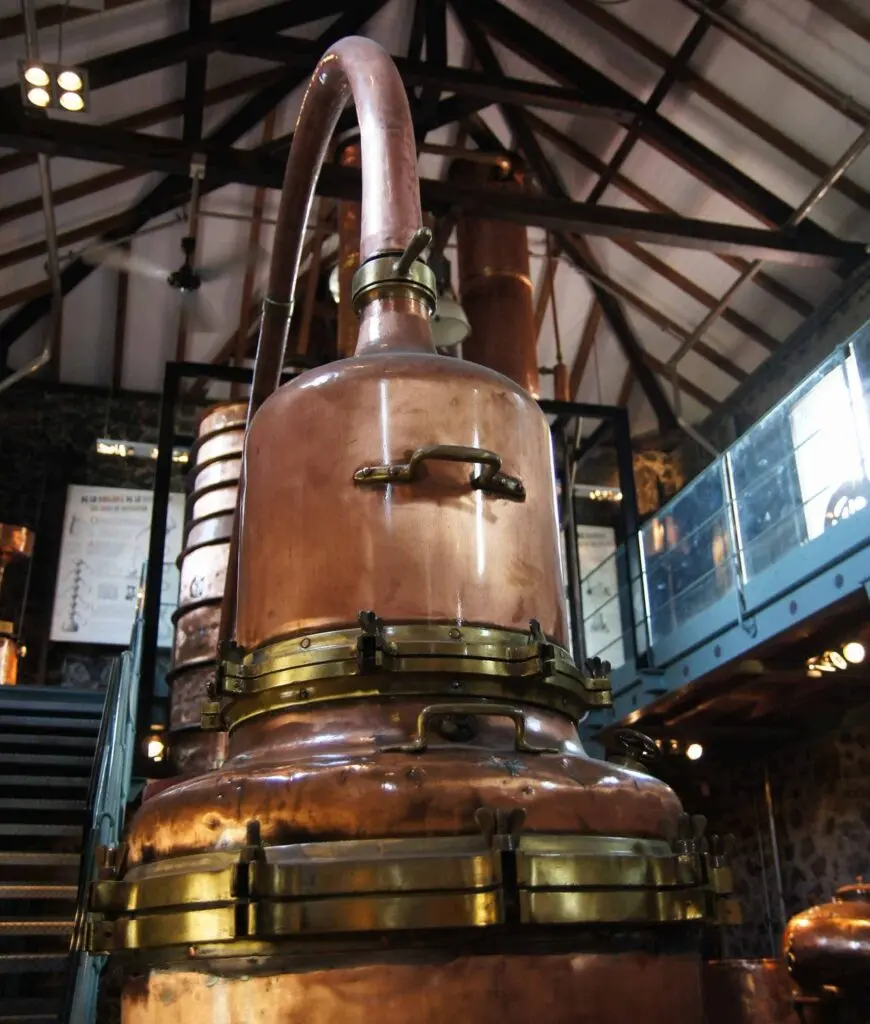
The rum is then distilled in a pot still (in batches) or a column still (continuously).
Pot stills produce an alcohol content of around 80 to 88% and are mostly used for the more aromatic rums. Column stills produce up to around 93 to 95.8% and are used for light rums.
3. Maturation
The rum can then mature in wooden casks. In the process it takes on colour, depending on how long it matures and how heavily the inside of the wood has been charred. Former bourbon barrels of around 200 litres, made of American white oak, are often used.
Rum that matures in stainless steel tanks stays colourless. Colouring such as caramel is sometimes added to it.
Regions
Rum is distilled all over the world, especially where sugar cane grows. In fact, rum is a by-product of cane sugar production. Every country and every region has its own way of fermenting and distilling, which is why there is such an enormous variety of rum.
Some sugar cane distillates have their own name. Cachaça is a sugar cane distillate from Brazil, and Batavia arrack (or simply arrack) comes from Indonesia.
Stroh is not rum
Stroh, popularly also called Stroh rum, is a so-called Inländer Rum: a high-strength spirit from Austria. Today its raw material is sugar cane molasses; in the past that was not the case. After fermentation the alcohol is obtained by column distillation, after which the manufacturer adds colourings and aroma and flavour essences.
As a result, Stroh does not meet the European definition of rum and may not be sold as rum in the EU. However, since 2008, under a European directive, rum made entirely in Austria may bear the name Inländer Rum.
Rum under European law: a distillate of sugar cane, distilled to less than 96% alcohol, with the organoleptic characteristics (aroma, taste and appearance) of rum.
The history of rum
Rum has been exported from the Caribbean islands for hundreds of years. The drink is closely linked to the tropical and subtropical climates in which sugar cane thrives. It was Christopher Columbus who brought sugar cane from the Canary Islands to the Caribbean on his second voyage in 1493.
According to most experts, however, the origins of rum are much older: more than 2000 years. Sugar cane grew in parts of southern China and India, and after his conquest of India Alexander the Great took it to Egypt as ‘the reed that gives honey without the help of bees’. In the Middle Ages the Saracens passed on their knowledge of distilling sugar cane to the Moors. They made arrack, an early forerunner of rum, and planted sugar cane in Europe some time after the year 636.
In Puerto Rico, Ponce de León, the island’s first Spanish governor, laid out the first cane fields. These soon became very important to the local economy. Some historians even believe that his legendary quest for the fountain of youth was in reality a far more practical search: for pure water to distil rum with.
The first sugar mill, the forerunner of the Puerto Rican rum industry, was built in 1524. The sugar cane distillate was then still called brebaje; the word rum was introduced later by English sailors. In the early 19th century rum became increasingly popular and the distilleries in Puerto Rico grew.
In 1893 the first modern column still arrived in Puerto Rico. It allowed the island to make a more refined, smoother rum at a much faster pace. The distilleries moved from vast, remote sugar plantations to more accessible locations and were soon centrally organised. In 1897 the first Puerto Rican rum was shipped to the United States mainland: around 18,000 litres.
During Prohibition in the United States, most rum distillers in Puerto Rico stayed in business, not as smugglers but by making industrial alcohol. When Prohibition ended in 1933, the island turned its attention to the American market. With government money and research, rum production was quickly modernised, and Puerto Rico grew into one of the largest rum producers in the world.
During the Second World War, American drinks producers had to limit their production and make industrial alcohol for the war industry. That rule did not apply to Puerto Rico, so demand for Puerto Rican rum rose sharply; rum and cola became a national drink. In 1952 there were around 100 brands of Puerto Rican rum on the market, later only around twelve. For a long time, around 77 per cent of all rum sold on the American mainland came from Puerto Rico.
Three styles of rum
English style
The oldest known style. These rums are usually distilled in pot stills and most of them mature in cask for several years. They come from (former) British territories; well-known examples are Barbados (Bajan rum), Jamaica and Trinidad.
English-style rum is prized for its quality and rich aromas, the result of a medium to long fermentation. They are often blends of rums of different ages; the label then usually states the age of the youngest rum.
Spanish style
This style came onto the market later and is somewhat lighter in taste than the English style. The rums are usually distilled in column stills, after a short to medium fermentation. Well-known countries are Cuba, the Dominican Republic, Guatemala and Panama.
The age on the label is usually the average age of the blend. With so-called solera rum, it is the age of the oldest rum in the blend.
French style: rhum agricole
Rhum agricole is made exclusively from fresh sugar cane juice. This rum usually has a fruity nose and a relatively dry mouthfeel, with more vegetal flavours. The style comes from (former) French territories such as Martinique, Guadeloupe, Réunion and Haiti.
Rhum agricole is usually distilled in column stills and is becoming increasingly popular among enthusiasts. On Martinique it is made according to strict AOC rules.
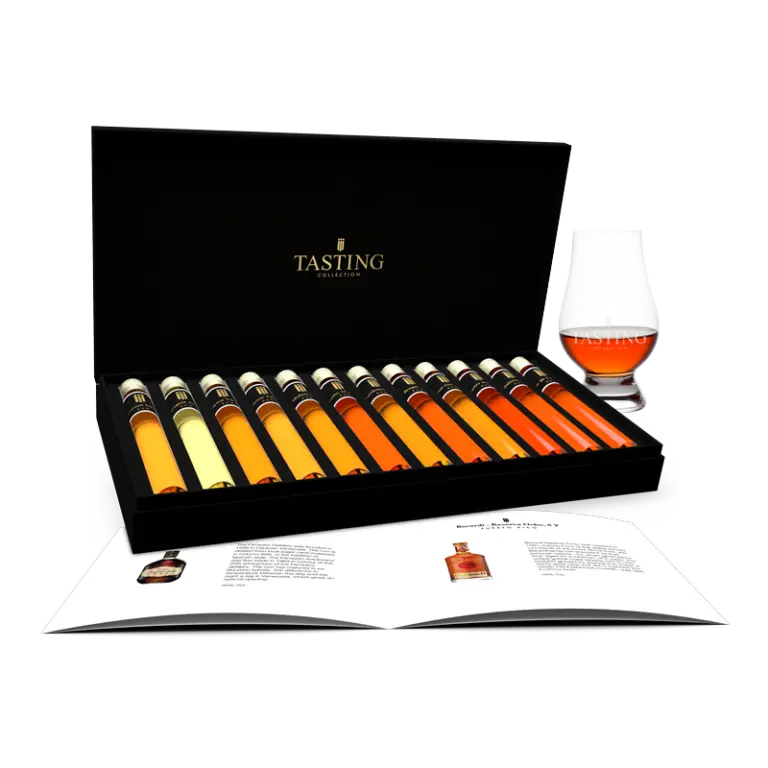
Rum Tasting Collection
Has this got you excited and do you want to taste the finest rums? Then order a Rum Tasting Collection. Try them all and discover which rum you like best!