

Gin
The summer drink: everything about gin, from juniper berry to London Dry.
What is gin?
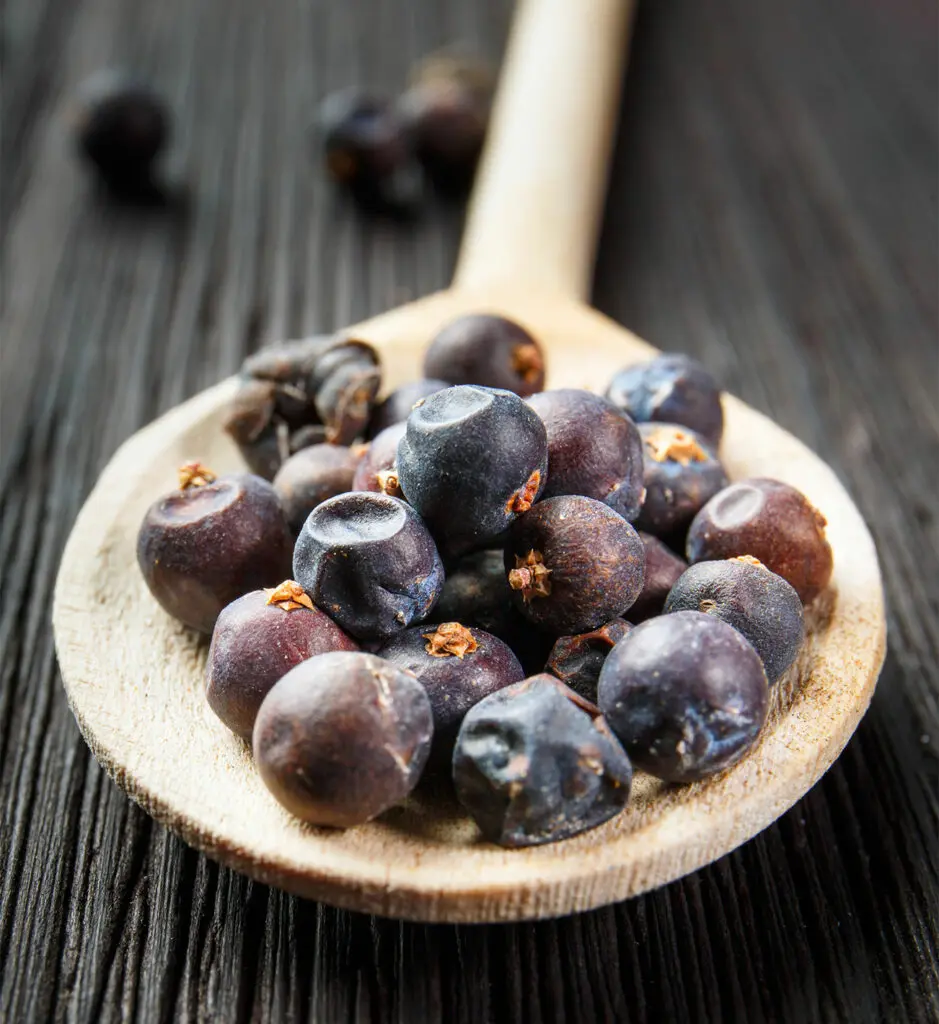
Gin is a distilled spirit based on neutral alcohol, usually from grain, that is flavoured with juniper berries during distillation. By law, juniper must be the dominant flavour. Herbs and spices are also used, such as coriander seed, angelica root, dried lemon, lime or orange peel and orris root. The variety of herbs and spices keeps on growing.
In the EU gin must contain at least 37.5% alcohol, in the United States 40%. The more alcohol, the more powerful the taste. Because of its dry taste, gin is rarely drunk neat. Sloe gin, made with sloe berries, is less dry.
Where is gin made?
Gin does not come from one particular area. The first gins came from London, but today gin is made all over the world: in Spain, the United States, Scotland, Scandinavia and the Netherlands, among others.
The history of gin
As early as the 11th century, Italian monks were distilling spirits whose harsh taste they masked with juniper berries. When the Black Death ravaged Europe in the centuries that followed, this forerunner of genever and gin was used as medicine. The drink is unlikely to have had much healing power, but the alcohol did have a numbing effect.
In the Low Countries a drink was made that closely resembled genever. Around 1650, Professor Franciscus de le Boë Sylvius is said to have made a distilled spirit with juniper, which he called genièvre: French for juniper berry. In everyday speech this soon became genever or jenever. Distillates with herbs such as anise, coriander and caraway were at first intended as medicine, but were soon being drunk for pleasure.
In Great Britain genever developed into a British product of its own: gin. English soldiers who fought alongside the Dutch against the Spanish in the Eighty Years’ War got to know genever. The fortifying glass before battle earned the nickname ‘Dutch Courage’.
In 1688 William III of Orange took the English throne. He encouraged the production of domestic spirits: from then on gin could be made without a licence, while the tax on imported spirits rose sharply. The result was an enormous production of cheap, poor-quality gin, made from inferior raw materials and with plenty of juniper and sugar to improve the taste.
Gin was affordable for everyone and the situation got completely out of hand. In 1720 production was equivalent to half a litre of gin for every Londoner, young and old included. Around 1740 half of all drinking establishments in London were a ‘gin shop’. Gin caused major social and medical problems.
Around 1750 the English government brought the abuse under control with the Sale of Spirits Act, also known as the Gin Act. Only large distilleries were still granted a licence, which benefited quality. With the invention of the Coffey still (also called the column still or patent still), purer distillates could later be made. This gave rise to the dry, unsweetened style we now know as London Dry Gin. The sickly sweet Old Tom gin, whose sugar was mainly meant to hide the harsh taste of the grain distillate, faded into the background. Gin grew from a drink of the masses into a respectable drink for the middle classes.
At the end of the 19th century gin overtook genever worldwide, mainly because the Americans, the first true cocktail drinkers, preferred gin. Gin is easy to mix and, until vodka came along, was the most important base for cocktails. When vodka became more popular in the 20th century, gin consumption declined. From the 1980s gin slowly regained ground, and since 2000 gin has been hugely popular, with a wider range than ever.
Types of gin
There are four well-known types of gin:
London Dry or Plymouth Dry Gin
Despite the name, this gin does not have to come from London: the name says something about the way it is made. All the ingredients go into a single distillation together, in the original way. After that, only water is added.
Distilled Gin
Distilled gin goes through the same process, but extra ingredients are added after distillation. Many of the original premium gins are made this way: redistilled with, for example, orange, lime or spices, or infused with, for example, rose petals or cucumber.
Compound Gin
With compound gin, the label simply says it is gin. Flavours or extracts have been added to these gins without being distilled with them. This method of production is cheaper; compound gin is widely used as an own brand by supermarkets and off-licences.
Old Tom Gin
A sweeter style that is being made more often again thanks to the comeback of gin and gin cocktails. Old Tom is much sweeter than classic gin, which makes it ideal for cocktails.
In addition, the term Ultra Premium Gin is used for gin that has been distilled several times and is therefore exceptionally pure.
Infusing gin
Infusing gin creates new flavours and textures. In an infusion you let flavourings steep into a liquid; the best-known example is tea in hot water. You can do the same with gin: during infusion, flavourings are added to the distillate.
The possibilities are endless. Herbs and spices are often used to create a particular flavour. When aroma molecules come into contact with other ingredients, air and heat, a series of chemical reactions takes place. The original aromatic compounds are converted into other substances, and so the taste of the infusion becomes increasingly complex.
The difference between gin and genever
What gin and genever have in common is the juniper berry; the difference lies in the alcohol. Gin is made from neutral alcohol which, as with vodka, is distilled to 96%. Genever also contains malt wine, with a strong grain flavour reminiscent of whisky that has not yet matured.
This gives genever a more idiosyncratic character and makes it less suitable for mixing. Genever is usually drunk neat, at room temperature or chilled. Gin gets its specific taste from the many botanicals during distillation and is, by contrast, very well suited to mixing. So the difference is clear, both in taste and in use.
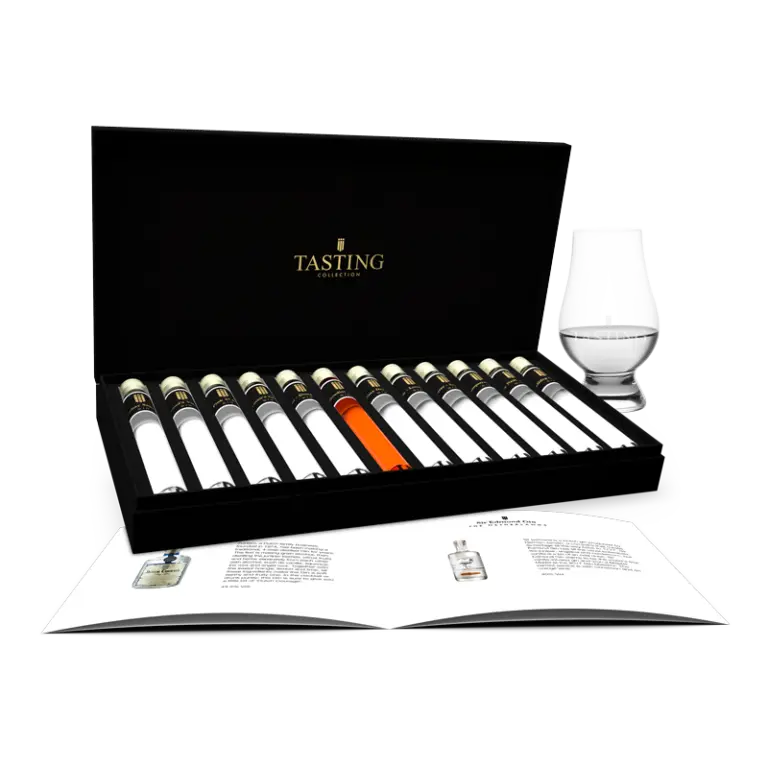
Gin Tasting Collection
Has this got you excited and do you want to taste the finest gins? Then order a Gin Tasting Collection. Try them all and discover which gin you like best!