
Olive oil
Everything about the origins, production, types and tasting of olive oil.
What is olive oil?
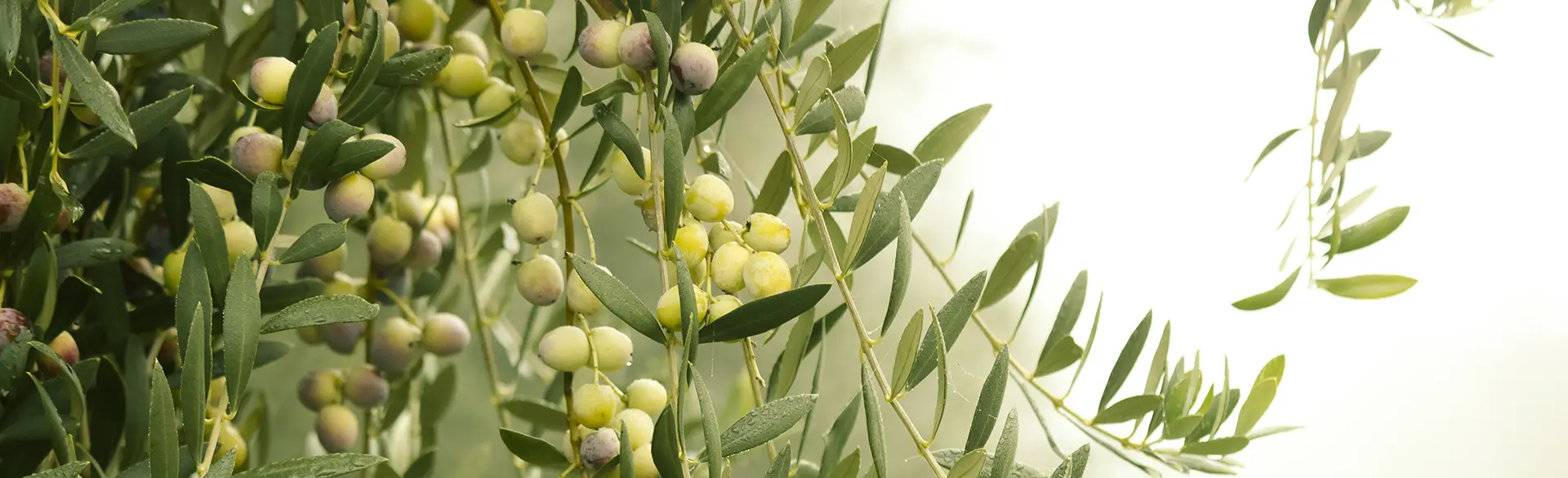
Olive oil is a vegetable oil obtained by pressing olives, the fruit of the olive tree. Olive oil is green or yellow in colour, in various shades. The colour says nothing about the quality. There are many varieties of olive tree and each variety produces its own, specific oil.
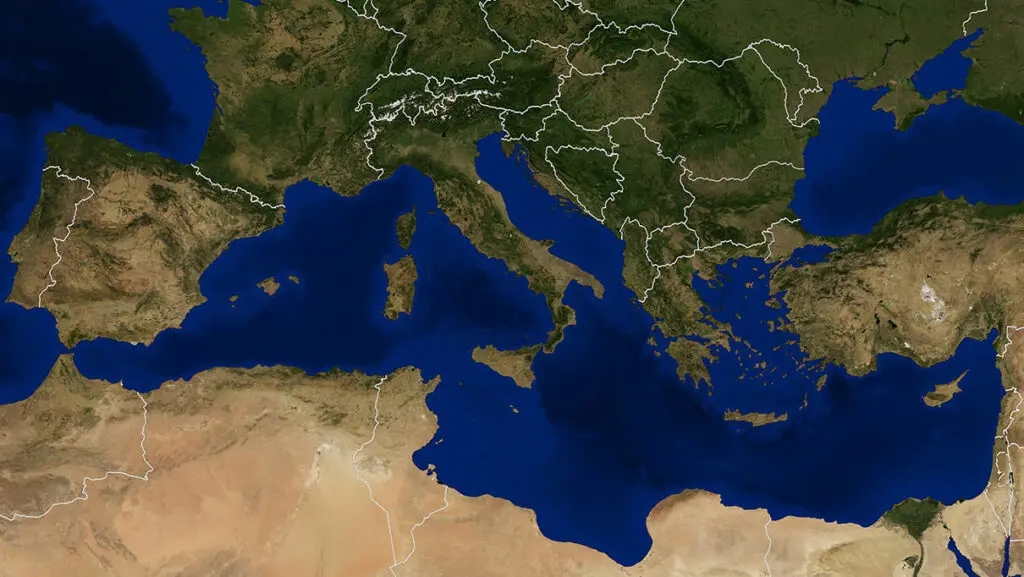
By far the most olive oil is produced in areas around the Mediterranean. In countries such as Spain, Italy, Greece, Portugal, France, Tunisia, Turkey, Syria and Morocco, olive oil has been important for thousands of years, with all kinds of uses.
Olive oil by country
Spain
Spain is the largest producer of olive oil in the world. Spanish producers are now subject to strict quality control. The different areas and olive varieties each give the oil its own character. Well-known areas are:
- Catalonia: Siurana and Les Garrigues
- Andalusia: Sierra Mágina, Priego de Córdoba, Baena and Sierra de Segura
- Central Spain: Campo de Montiel and Toledo
The oil from Andalusia is made from the picual olive, which gives the oil a strong taste: intense and powerful, with a lovely balance in the fruit. Oils from the north of Spain are often sweeter and milder, and not spicy.
Some oils have a more grassy or almond-like character, partly due to the surrounding vegetation. Traditionally, for example, almond trees are planted between the olive trees to combat fruit flies and other pests.
Italy
Italy is an important supplier of good-quality extra virgin olive oil. Umbria and Tuscany mainly produce grass-green, characterful oils with a peppery or spicy finish. In Liguria, in the north of the country, milder, fresh oils are made.
Most Italian oil, however, is produced in the south. No less than 80% of production comes mainly from Apulia, but also from areas such as Calabria, Sicily, Campania and Sardinia.
Greece
According to Greek mythology, olive oil is a gift from the goddess Athena. Nowhere else is olive oil so intertwined with daily life as in Greece. The Greeks use around 21 litres per person per year. By comparison: a Spaniard uses 12 and a Dutch person not even half a litre.
Greek oil comes mainly from the koroneiki olive. The best-known olive oil areas are Crete and the Peloponnese.
Portugal
Portuguese olive oil is generally golden yellow in colour, with a pronounced aroma and a slightly overripe taste. In Portugal the olives are deliberately picked later, and sometimes not even harvested directly from the tree. This late harvest produces the golden yellow colour, the strong aroma and the powerful taste.
France
In terms of volume, France plays only a small role. Even so, French olive oil is important for the top segment, thanks to the country’s culinary reputation and the luxurious image of the Côte d’Azur. A handful of estates in the south of France make superb olive oils that rank among the finest in the world. Estoublon, Alziari and Le Vieux Moulin are examples, with a gentle aroma and different fruit notes, depending on the olives.
French oil comes mainly from the area around Nyons (from the tanche olive) and from the coast, where the picholine olive is used.
Other countries
Within Europe, olive oil is also produced in Croatia, Bosnia, Albania, Cyprus and North Macedonia. Beyond Europe, olive oil comes from Turkey, Israel, Morocco, Tunisia and other North African countries, and even from the United States, Mexico, Brazil, Australia and China.
European production, however, is by far the largest. The European Union is particularly keen to keep its leading role in the quality segment and provides subsidies for its development.
Production
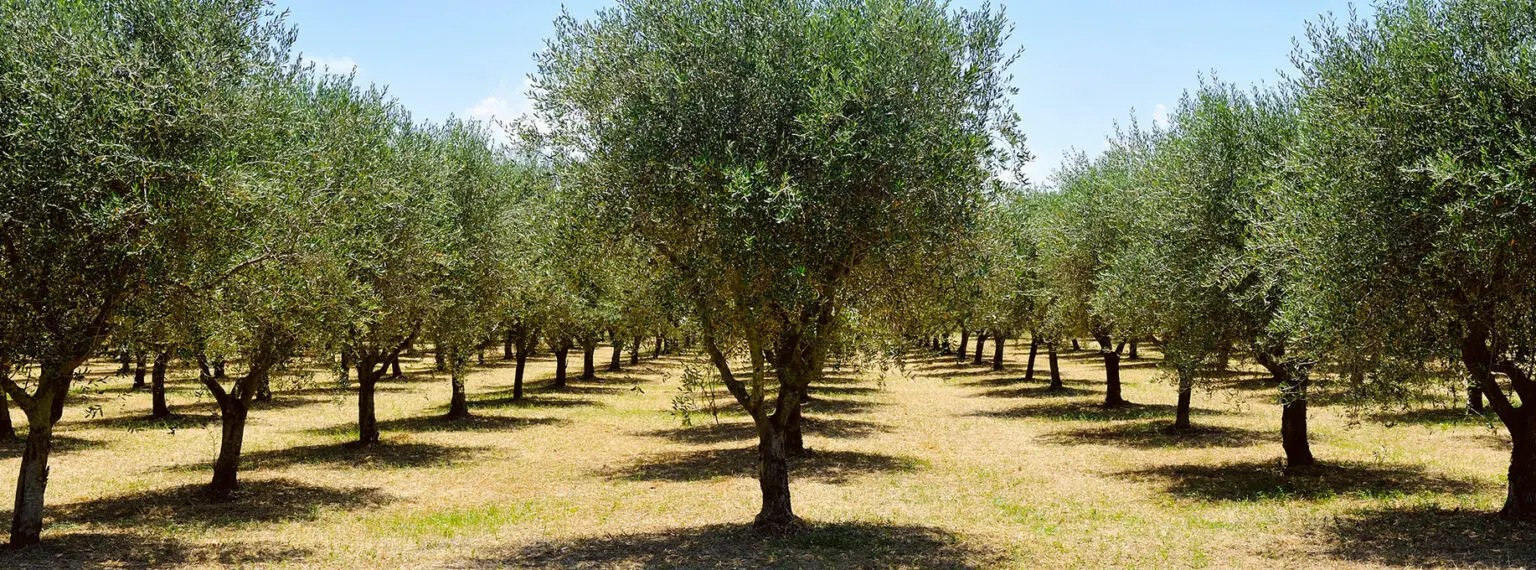
An olive tree produces 5 to 10 kilos of olives a year, enough for 1 to 2 litres of olive oil. Of all olives, 90% are used to produce olive oil.
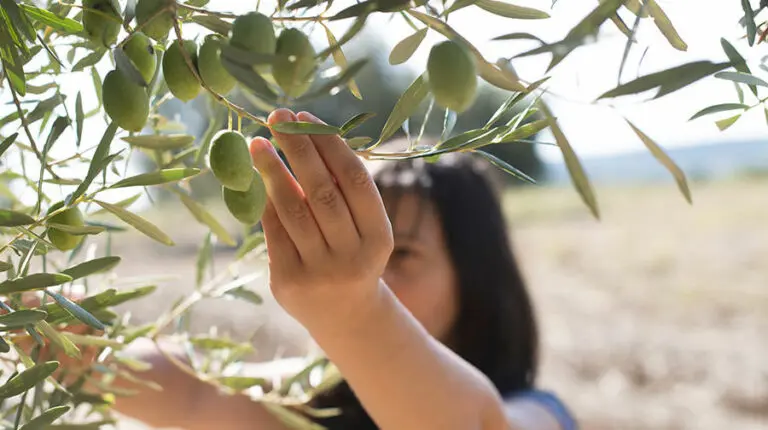
Olives are usually harvested from November to January, depending on the variety. For the better oils, the olives are often picked by hand. For more ordinary oil, the olives are removed from the trees with a shaking machine. Older trees are always picked by hand, because the shaking machine can damage their roots.
Because olives start to ferment quickly after picking, they need to be processed as soon as possible. First twigs and leaves are removed, then the olives are washed and ground into a paste. The oil is then extracted from this paste. This can be done in two ways: by pressing or by centrifuging.
Pressing
The olives are pressed within 24 hours of the harvest. Both the flesh and the stone contain oil: the flesh 30 to 50%, the stone 5%. The paste is kneaded and pressed, in the past with a screw press and later hydraulically, at a pressure of up to 400 bar. The mixture of oil and water from the press is then separated in a centrifuge.
This is called cold pressing, but friction does warm the paste slightly, which makes the oil come out more easily. The temperature must not rise above 28 °C, otherwise the chemical composition of the oil changes. The same applies to the oil once it has been bottled.
At around 15 °C, the first pressing yields some 10 to 20% oil. So 1 litre of olive oil requires 5 to 10 kilos of olives.
Centrifuging
Today the liquid (a mixture of oil and water) is usually separated from the pulp with a centrifuge. The horizontal drum of the centrifuge is almost 2 metres long, has a diameter of over half a metre and turns at around 3000 revolutions per minute. It is enclosed in a sturdy casing, so the process itself cannot be seen.
The advantage of this method is that the olive stone stays intact (a broken stone gives the oil a harsh taste) and that it is a continuous process. With centrifuging, therefore, you cannot speak of a first or second pressing.
The different types of olive oil
If an oil does not carry the ‘extra virgin’ label, that does not mean it is not good. You can measure and taste which type of oil it is: virgin and especially extra virgin oil have no taste defects, a lower acidity (expressed as free fatty acids) and taste fruitier.
Extra virgin
The best and most expensive quality of olive oil, from the first pressing, with the most pronounced taste. Extra virgin olive oil has an acidity of no more than 0.8%.
Virgin
Olive oil from the first pressing, obtained solely by mechanical pressure. Nothing is heated and no other agents are used.
Pure or ordinary olive oil
A blend of refined olive oil with a little virgin or extra virgin oil, which provides the flavour. A perfectly good oil, with a more neutral taste and fewer essential nutrients than the more expensive qualities.
Refined olive oil
Refining olive oil removes impurities from the oil. Part of the flavour is lost in the process.
Olive pomace oil
Made from what remains after pressing and from olives that did not pass the first quality selection because of their size, damage or overripeness. This oil is usually of lower quality.
Is olive oil healthy?
Olive oil consists mainly of oleic acid, an unsaturated fatty acid. It also contains palmitic acid, a saturated fatty acid. A ripe olive contains 15 to 35% oil, depending on the variety, the soil and the weather. Olive oil freezes at -6 °C and its boiling point is around 300 °C.
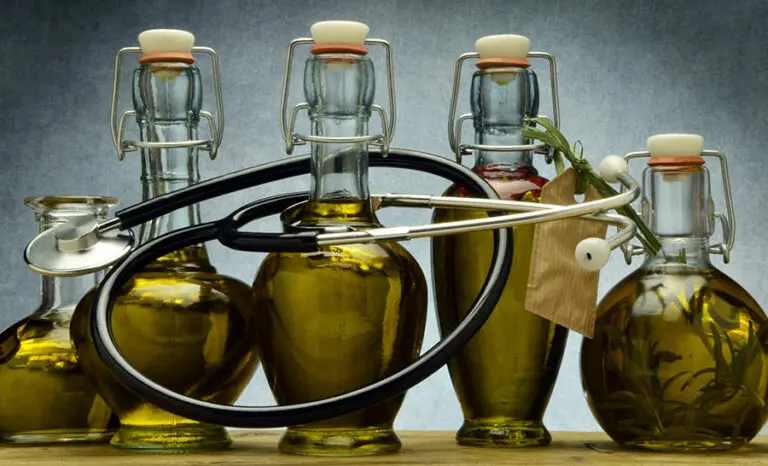
Olive oil is regarded as a healthy food. Firstly, the oil is rich in monounsaturated fatty acids, which can replace the less healthy fats in the body. Secondly, olive oil contains substances such as natural antioxidants, which protect cells against ageing. That is why olive oil can be worthwhile even on a low-fat diet.
Vegetable fats contain more unsaturated fatty acids than animal fats. These lower cholesterol and have a beneficial effect on blood lipids.
Not too hot
When unsaturated fatty acids are heated strongly for a long time, substances can form, some of which are carcinogenic. Olive oil breaks down when heated to 150 to 200 °C for a long time. Heating it once for stir-frying or roasting is no problem, but prolonged and repeated heating, as in deep-frying, is not recommended.
Still being researched
Although the beneficial effects of olive oil have been known for thousands of years and are confirmed time and again, they have still not been fully explained. It therefore remains a popular subject of food research. In 2005 the journal Nature reported that researchers had found a substance in olive oil, oleocanthal, that works in the same way as the painkiller and anti-inflammatory ibuprofen.
Tasting and using olive oil
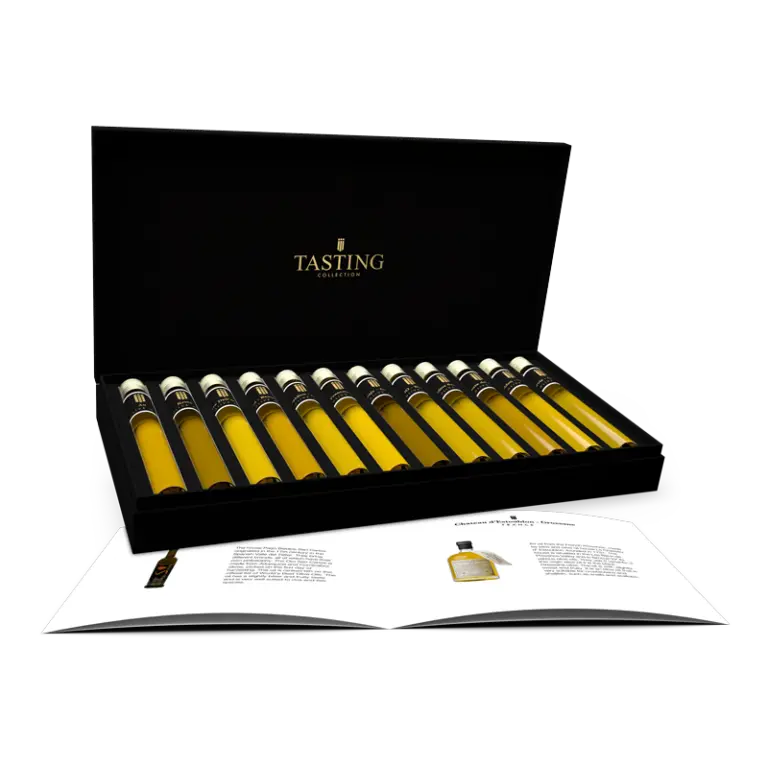
Like wine, olive oil comes from different regions and countries, and the taste can vary enormously. If you buy a good olive oil, taste it carefully and try out different flavours. You can of course do this very well with Tasting Collection, which offers several fine extra virgin olive oils from different areas in one collection.
The taste of olive oil can vary greatly. A Spanish olive oil is more bitter and therefore goes well with heartier dishes, for example with lentils or chorizo. Italian oil is much fresher in taste and goes well with light dishes, such as vegetables and fish.
Tasting
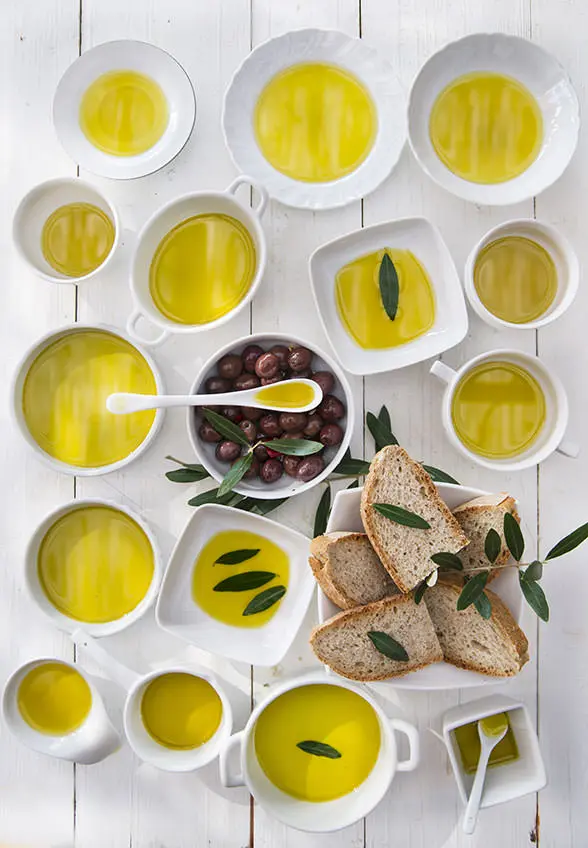
Taste olive oil blind and warm it briefly by holding the glass in your hand. Smell it carefully. First you taste the sweet, grassy flavour, then comes the bitter and peppery sensation. That pepperiness comes from the natural antioxidants in the oil, such as oleocanthal.
Cooking
Use extra virgin olive oil cold, for pasta, salads, vinaigrettes, tapenades and cold sauces. Extra virgin olive oil is not suitable for deep-frying; ordinary olive oil is purer and better for that. You can fry and roast in extra virgin oil, but most of the flavour is lost when it is heated.
Drizzle a little extra virgin oil over the (warm) dish just before eating. That is when the flavour and aromas come into their own best.
Storage
Store olive oil in a cool, dark place. After pressing, oil keeps for about a year and a half; after that the taste steadily deteriorates.
At around eight degrees, olive oil already starts to thicken. That does no harm: at room temperature it becomes liquid again by itself.
Olive Oil Tasting Collection
Has this got you excited and do you want to taste the finest olive oils? Then order an Olive Oil Tasting Collection. Try them all and discover which olive oil you like best!