

Tea
Origins, production, types and the right way to brew.
Brewing tea: how do you do it?

Tea comes in a great many different qualities and brands. Tasting Collection has brought the finest qualities from all over the world together in one collection. That way you not only learn about the origins and production process of tea, but also get to taste the best teas in the world straight away, brewed the ‘right’ way.
Every culture has its own way of preparing tea. The English drink their tea strong and with milk, the Chinese brew their tea according to ‘Gong Fu Cha’ (making tea with great skill) and the Turks like to put lots of sugar in their tea. What all methods have in common is that they use the finest quality loose-leaf tea, over which hot water is poured in a teapot.
The easiest way to prepare loose-leaf tea yourself is with a teapot and a tea strainer, infuser or filter. It is important that the tea leaves have enough room to unfurl, so that the aroma and flavour can come into their own. For large-leaf loose tea, you are better off using a tea maker or tea press, or putting the tea loose in the pot.
For the right temperature, use a tea thermometer or a kettle with temperature control, or go by feel. Pour the water onto the tea and keep a close eye on the time, for example with a tea timer. The tea should stay at temperature while it steeps, so place the teapot on a tea light warmer or keep it warm under a tea cosy.
Brewing temperature
Above all, drink your tea the way you like it best; tastes simply differ. As a guideline, we do give brewing instructions with all our teas, so you know how water, temperature and tea affect each other. These are the ideal temperatures for each type:
| Type of tea | Temperature |
|---|---|
| White tea | 80 °C |
| Yellow tea | 80 to 85 °C |
| Green tea | 65 to 80 °C |
| Black tea | 90 to 100 °C |
| Oolong | 100 °C |
| Pu-erh | 95 to 100 °C |
| Rooibos | 100 °C |
| Herbal | 100 °C |
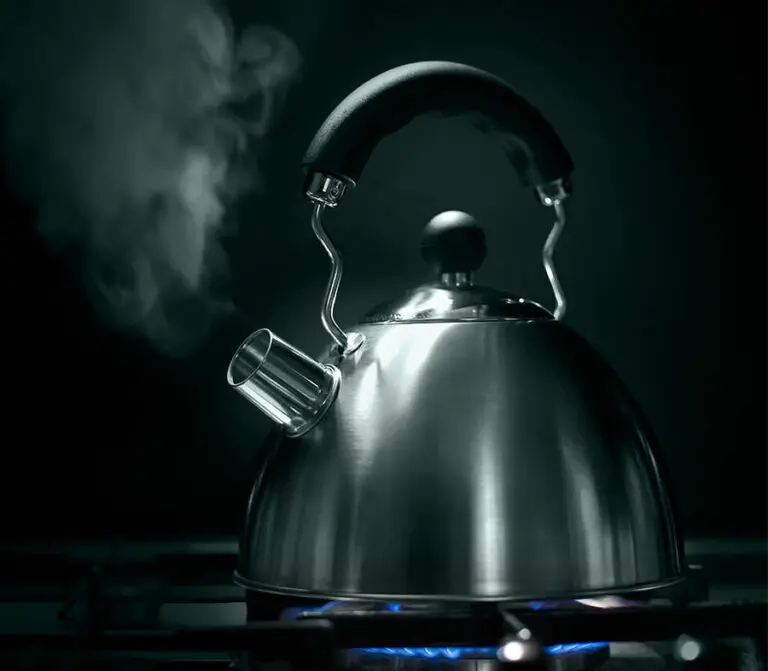
How long should it steep?
You are probably familiar with the warning to take the tea bag out of the water after just a few moments. That makes sense, because lower-quality tea quickly turns bitter. A good-quality tea, however, does not become extremely bitter. Try the test yourself: brew a very high-quality tea (for example from Tasting Collection) in the evening before bed and taste it in the morning.
So how long can tea steep? As long as you like. You make the flavour stronger or milder, depending on what you enjoy drinking. Do bear in mind, though, that the leaves need at least 15 minutes to release their antioxidants into the water. If you take them out sooner, you will be drinking a milder tea, but taking in few antioxidants.
And did you know that you can infuse the same tea leaves several times? The flavour becomes a good deal milder with each infusion, but the leaves keep on releasing antioxidants.
The right amount
We recommend that you experiment with the amount. Every Tasting Collection tea tube contains enough tea for several cups, so experiment to your heart’s content.
Don’t drink it too hot
Don’t drink your tea too hot. Drinking very hot beverages (hotter than 65 °C) has been linked to oesophageal cancer.

The influence of water on taste
Not only the tea but also the water you use determines the end result. After all, tea is 99% water. Limescale and minerals in the water react with the substances in the tea and change its taste and aroma.
Tap water does not give the best result. It usually contains too many minerals and its dry residue (limescale) is too high. Ideal is water with a pH of 7 and a dry residue of less than 50 mg per litre. With special filters or reverse osmosis you can reduce the mineral content and dry residue to soft, pure water.
You can also use bottled mineral water. In the Netherlands, Spa Blauw is one of the most neutral waters, with a pH of 6 and a dry residue of 33 mg per litre. The difference is enormous, especially with delicate teas such as white tea, green tea and lightly oxidised oolongs.
The history of tea
According to a Chinese legend, Emperor Shen Nung discovered tea in 2737 BC. As a herbalist, he believed that drinking boiled water contributed to good health, and he demanded that his subjects boil their water before drinking it.
One summer’s day, while travelling, he stopped with his entourage for a drink. As his servants were boiling water, a few dried leaves from a tea bush fell into the water, giving off a pleasant scent. When the emperor drank it, he noticed how refreshing and aromatic it was.
At first tea was regarded only as a medicine. It was not until the Tang and Song dynasties (7th to 13th centuries) that tea drinking became part of everyday Chinese tradition. During the Tang dynasty, after twenty years of study, Lu Yu published the first book about tea, the Cha Jing, on the production of tea, the importance of good water and the right way to brew. Later the Chinese government encouraged tea production and the building of teahouses, so that everyone could enjoy tea.
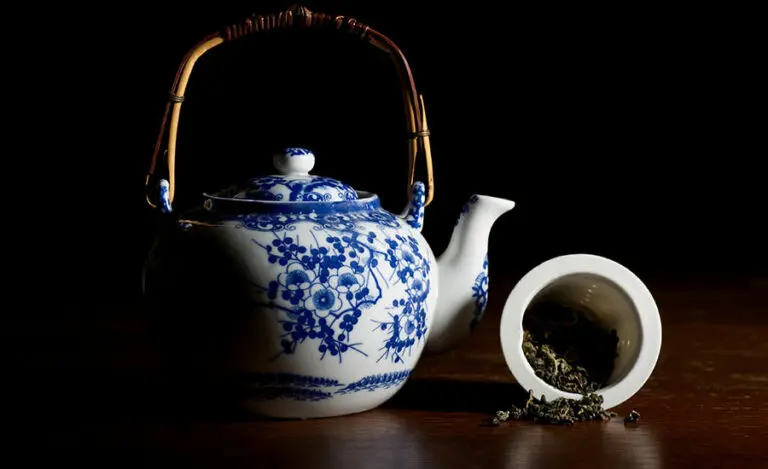
In the ninth century tea drinking spread to Japan, where it was raised to an art form. Performing the Japanese tea ceremony correctly takes years of study.
The earliest mention of tea in Western literature dates from 1559. That year Giambattista Ramusio’s Navigationi et Viaggi appeared in Venice, a collection of travel stories including the account of the Persian merchant Hajji Mohammed. In China he had come to know ‘Chiai Catai’: a drink of leaves boiled in water. After the middle of the sixteenth century, Portuguese and Italian missionaries in China and Japan also described the drinking of tea.
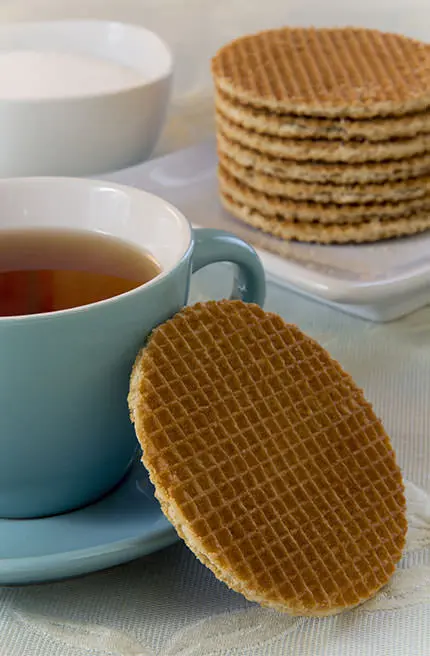
The Dutch history of tea
In the Golden Age, the VOC brought a first small quantity of tea to the Netherlands. Tea was a rarity at the time and was mainly used as a remedy for all kinds of ailments. Until well into the 18th century it remained a very costly drink for the wealthy, who sometimes even built special tea pavilions for it in their gardens.
Later in the 17th century, the VOC shipped larger quantities of Chinese tea to the Netherlands via Batavia. The Netherlands established tea plantations on Java and Sumatra, while England did so in its colonies of India and Sri Lanka, then called Ceylon. Hence the name Ceylon tea.
By the end of the Golden Age, drinking tea had become normal for the middle classes too. No longer for its healing properties, but because it was delicious and convivial. Ladies in particular would visit one another to drink tea and catch up: the ‘theekransje’, or tea circle, which went down badly with many men. Even so, tea drinking spread through all levels of society, and it is still a popular social pastime.
Tea countries
Tea is produced in many countries around the world. The best-known and largest tea-producing countries are China, India, Japan, Sri Lanka (Ceylon) and Taiwan.
In addition, a number of countries are producing more and more tea and their teas are becoming increasingly popular, such as Nepal, Indonesia, Vietnam and various African countries.

Growing and producing tea
The taste of tea is determined by the type of tea, the climate, the area, the way it is pruned and plucked, and further processing.
Climate
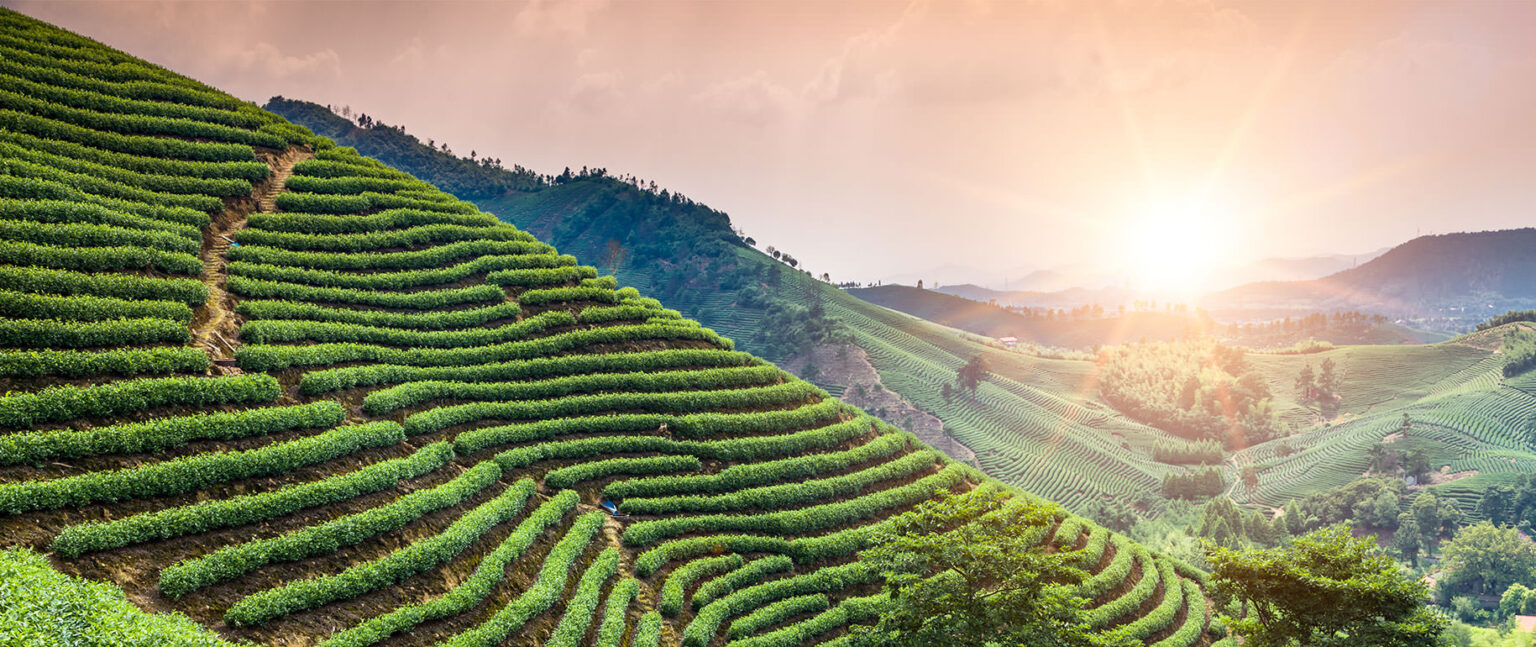
Tea bushes grow in a tropical or subtropical climate. They need high temperatures, sun and sufficient moisture.
Area
The plantations are usually on a mountainside. The higher the plantation, the better the quality of the tea in general. Just as with whisky and olive oil, you can taste the soil in tea: in tea from the mountains you taste the minerals.
Pruning and plucking
Alongside plucking, pruning is the most important process for the productivity of the tea plant. If a bush is not pruned, or pruned too late, the harvest suffers. Most tea bushes today are propagated from cuttings rather than grown from seed.
After about 6 months a bush is cut back for the first time, known as pruning, and after 3 to 4 years it can be harvested for the first time. Only the young leaves are plucked, by hand or by machine; hand plucking gives the best result. Harvesting can take place all year round, but the best quality is plucked in the dry monsoon.
Every 5 to 6 years a tea bush is cut right back. Tea bushes can live for 120 to 140 years.
From leaf to tea
1. Withering
First, moisture is drawn from the leaves so that they can be processed further. At 25 to 30 °C the leaves wilt and become soft and supple.
2. Rolling
The leaves are rolled between two abrasive surfaces for about half an hour, releasing the leaf sap. Without this step, oxidation is not possible.
3. Oxidation
In the oxidation room (25 °C, 95% humidity), the enzymes in the leaf develop flavour, colour and aroma within a few hours. The duration determines the character: from unoxidised green to fully oxidised black tea. Heating and drying stop the process.
4. Drying
The leaves are dried at around 95 °C to a moisture content of 4 to 6%. From some 100 kilos of plucked leaves, about 20 kilos of black tea remain.
5. Sorting
Large shaking sieves sort the now broken tea leaves by size, leaving different grades of tea.
The exception: fermentation
In fermentation, bacteria and yeasts act on the tea leaves from outside, a little like with wine. Only one type of tea, pu-erh, is truly fermented rather than oxidised. In South-East Asia, tea leaves used to be pressed into tea bricks, which were used not only for tea but also as food and currency.
Types of tea
Besides all kinds of blends and flavoured teas, there are six basic types, which differ mainly in the way they are processed.
White tea
Tea in its purest form, from carefully hand-plucked young leaf buds, picked before the leaf has unfurled. They are often covered in silvery-white down, which is even more visible after drying: hence the name. After plucking and withering, the leaves are lightly rolled and dried in the sun or lightly baked.
Yellow tea
The rarest tea. The production process is a closely guarded secret; it is thought to be lightly oxidised tea made from young tea buds.
Green tea
Unoxidised tea leaves that are heated after plucking, in Japan usually by steaming. Jasmine tea is a well-known green tea to which jasmine blossom has been added.
Oolong
Semi-oxidised tea, halfway between green and black tea.
Black tea
The most widely drunk tea in the Netherlands. This tea is fully oxidised.
Pu-erh
The only fermented tea. Pu-erh can be kept for more than 50 years.
Well-known black teas
English blend
A commonly used name for a blend of black teas.
Ceylon tea
From Sri Lanka (Ceylon), sometimes even named after a particular region, such as Kandy.
Assam tea
From the Assam district in India.
Darjeeling
A highly prized tea from the Darjeeling region of India, at the foot of the Himalayas. Darjeeling First Flush, the first plucking of the year, is regarded as the champagne of teas. The fine, hand-plucked top two leaves give a wonderfully mellow flavour. It is one of the most expensive teas and is flown in every year in May.
Earl Grey
Black tea flavoured with bergamot, a citrus fruit.
Lapsang souchong
This tea is dried over a fire of pine wood, which gives it a strong smoky flavour.
Herbal
Herbs are often brewed as tea too, but strictly speaking they are not teas, because they do not come from the tea plant (Camellia sinensis). In that case we speak of an infusion. Examples are rooibos, liquorice, chamomile, mint and nettle.
Tea ceremonies
Japan
The Japanese tea ceremony is world-famous. The ceremony belongs to the Zen tradition, is bound by very strict rules and lasts for hours. Every action is carried out in detail according to centuries-old rules. Powdered green tea, matcha, is whisked in a bowl with special tea utensils. The most important guest takes the first three sips and then passes the bowl on to the other guests. Sado, the way of tea, is part of Japanese Zen culture.
United Kingdom
The British afternoon tea consists of fairly strong tea with milk and sugar, served with scones, sometimes sandwiches and all kinds of biscuits and cake.
High tea is something else: it is the evening meal, usually simply called ‘tea’. High tea arose during the Industrial Revolution. After a long working day, exhausted labourers ate meat, bread, butter, pickles, cheese and of course tea, at a high dining table rather than the low tea table of afternoon tea.
Morocco
In Morocco people drink mint tea (atay or Tuareg tea) from small glasses. Its preparation is strictly ritual. Chinese green tea (Gunpowder) is rinsed in a metal teapot with a splash of boiling water. Then sugar and fresh spearmint leaves go into the pot, boiling water is poured on and the tea is left to boil for another 5 minutes.
The first glass goes back into the pot, so that all the flavours blend. Then the tea is poured from as high as possible, so that a layer of foam forms on top. Pouring from a height symbolises hospitality: the higher, the more hospitable.
Turkey, Russia and Iran
In their coffee houses Turks drink more tea than coffee, and there is always a pot of tea on the stove. It is tradition for future brides to master the art of making tea.
In Turkey, Russia and Iran tea is made with a samovar, in which hot water is kept. Very strong tea is kept warm on top and diluted with water from the samovar when poured.
China
Since the Cultural Revolution, Chinese tea culture has been largely confined to the family circle. Before that, there was a lively tea ceremony, mainly centred on green tea. Even so, hot water for tea is offered even on trains, and the tea is brewed in mugs or cups with a small lid. The lid holds back the leaves.
Tibet
In Tibet tea is used in the form of bricks with images in relief. A piece of brick is broken off and made into tea with water, yak butter and salt. Tibetan tea culture consists almost entirely of butter tea and milk tea.
East Frisia
In the Netherlands and Belgium the tea ritual receives little attention, but in East Frisia in Germany people drink three cups of tea five times a day. A lump of rock candy goes into the cup, the hot tea is poured over it, followed by a spoonful of cream. It is not stirred, so you taste the tea, the cream and the sugar in turn. That is also why the cups are smaller than the usual Dutch ones.
Egypt and the Middle East
In Egypt, Pakistan and Saudi Arabia people drink black tea from India or Sri Lanka, preferably strong and very sweet.
South America
In South America mate is popular, a drink made from young leaves and twigs. Mate is brewed and served in a hollowed-out gourd and drunk through a metal or wooden straw, the bombilla, which holds back the sediment.
Tropical countries
A tea party around five o’clock is very popular in the tropics. Tea is the basis, preferably cooled as a refreshing drink, with sweet or savoury treats made from banana, coconut, pumpkin or sweet potato. On a summer’s day, a tropical tea party like this would not be out of place in the Netherlands either.
Tea and food pairing
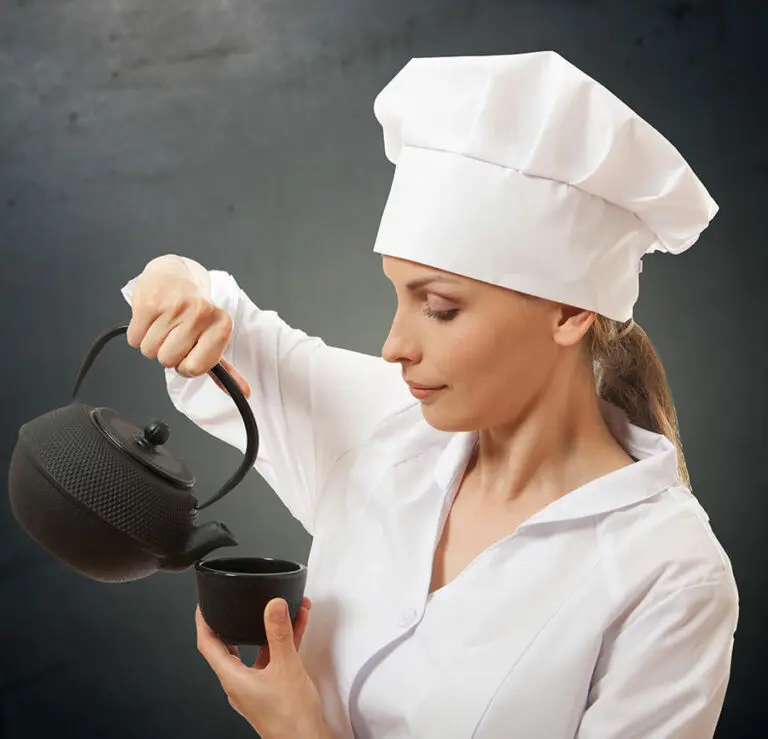
In Western countries we are used to drinking wine with food, but in China and Japan people more often drink tea. Usually the local tea with local dishes, and that almost always works perfectly. Just as with wine, you can use tea to create the flavour explosion of 1 + 1 = 3. Tea also has advantages: it contains no alcohol and is by nature more complementary to food.
You go about it the same way as when pairing wine and food. First decide what you want the tea to do: refresh and cleanse the palate of strong flavours (for example between courses), enhance a flavour in your dish, relieve a feeling of fullness or aid digestion.
Then it is a matter of tasting. It remains very personal and there are no fixed rules, but these guidelines will help you on your way. You can also use tea as an ingredient in a dish, by the way.
Guidelines by type of tea
White tea
Neutralises flavours and cleanses the palate between two courses. Also a great match for spicy dishes and cheese.
Green tea
If white wine goes with the dish, so does green tea. Japanese green tea goes perfectly with seafood, fish and rice dishes, Chinese green tea with green salads, cheese and chicken.
Black tea
If red wine goes with the dish, so does black tea. Its full flavour and tannins suit rich, creamy dishes such as grilled meat and curries, but also chocolate desserts or crème brûlée.
Oolong
Depends greatly on the degree of oxidation and roasting. Lightly oxidised oolongs go with light dishes, just like green tea. Heavily oxidised and roasted oolongs, like black tea, go with fuller dishes.
Pu-erh
Tastes very good with rich dark chocolate and warm, spicy dishes with, for example, cinnamon and cardamom.
Rooibos
With its sweet, spicy flavour and notes of vanilla, it pairs beautifully with sweet dishes.
A tea sommelier: what is that?
A sommelier makes you think of wine straight away: someone who selects the wines to go with the dishes and tells the story behind them at the table. A tea sommelier does the same with tea. He tastes like no one else, pairs tea and food so that aromas and flavours come into their own, and creates the finest tea cocktails.
Robert Schinkel, winner of the first tea sommelier competition held by tea maker Dilmah, explains that tea can, for example, soften the sharpness of cheese or bring out more flavours in it. Conversely, cheese can accentuate the maltiness of tea or offer a contrast to its bitterness. With dark chocolate, you balance the bitter aftertaste with rich, robust teas with a pronounced character: the darker the chocolate, the more powerful the tea.
Storing tea
The aroma and flavour of the tea in your Tasting Collection will keep for a long time if you put the cap firmly back on the tube after use and store the tea in a cool, dark place, but not in the fridge.
Theine and caffeine
Steeping mainly releases aroma and flavour compounds, including theine. Theine is another name for caffeine, which has a mildly stimulating effect: many people feel more alert because of it. A cup of tea contains on average 30 milligrams of caffeine, a cup of coffee on average 75 milligrams. Tea also contains theanine and fluoride.
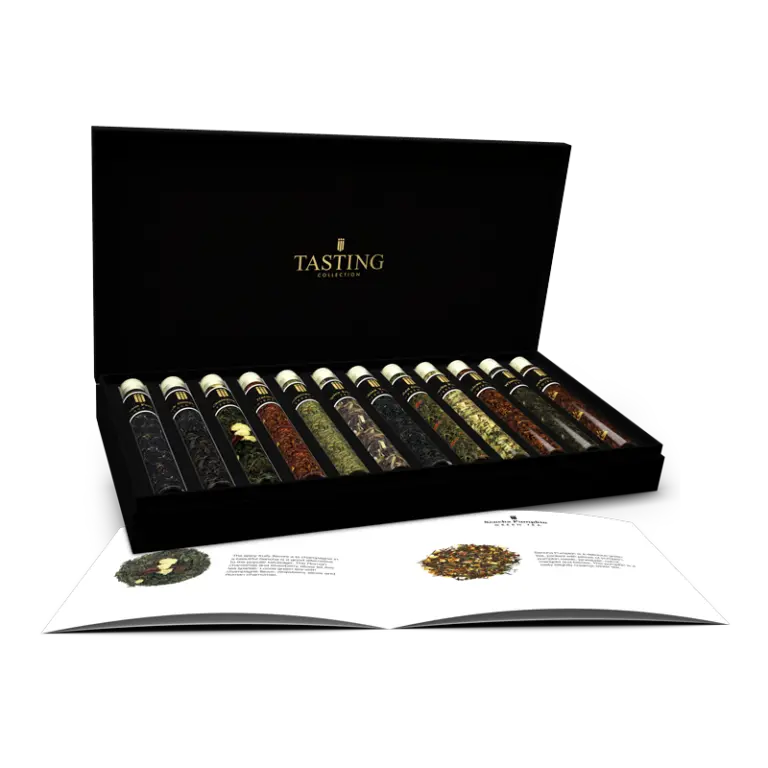
Tea Tasting Collection
Has this got you excited and do you want to taste the finest teas? Then order a Tea Tasting Collection. Try them all and discover which tea you like best!