

Port
The fortified wine from Portugal’s Douro Valley.
What is port?
Port, or porto, is a fortified sweet wine from Portugal: red, white or rosé, with an alcohol content of 18 to 20 per cent. You drink port as an aperitif, as a digestif or with dessert.
Port must be made from grapes from a demarcated wine region along the river Douro. Fortified wine that closely resembles port is now made all over the world, especially in Australia and South Africa. Even so, in the European Union only the product from Portugal may be called ‘port’.
The history of port
The name port comes from the port city of Porto. As early as the 13th and 14th centuries, wine was exported from Portugal to England. When the English were at odds with France, already a great wine country at the time, they looked for their wine in other countries.
To keep the Portuguese wine in good condition during the long sea voyage, some brandy was added at the end of production. At the end of the 18th century, producers began stopping fermentation with grape spirit: the so-called mutage. This way not all the sugars are converted into alcohol and the wine stays sweet. The added alcohol raised the alcohol content to between 19 and 22%.
The Douro Valley
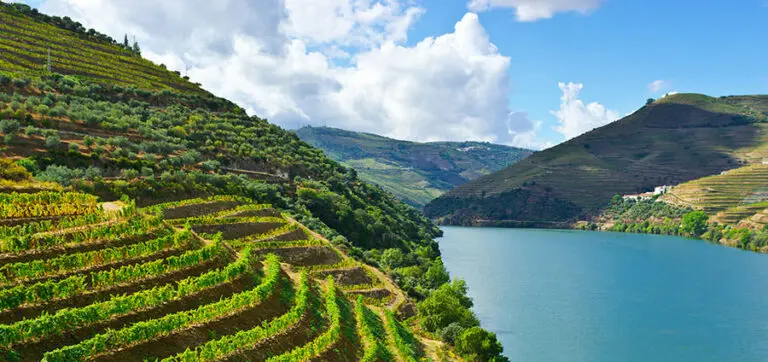
The Douro Valley lies on the upper reaches of the Douro, in north-eastern Portugal. The valley is divided into wine estates, the quintas. Many quintas grow grapes for the port houses in Porto and Vila Nova de Gaia. A small number make port themselves; this is then called Single Quinta Port.
The vineyards are laid out in terraces, sometimes very steep, on the slopes of the valley. In 2001 UNESCO declared the region a World Heritage Site. An official classification ranks the 26,000 hectares of vineyard where grapes for port may be grown.
Port production
When the grapes arrive from the vineyard, they are destemmed partly or not at all and processed on the same day. Alongside modern vinification systems, grapes are still trodden in lagares: low stone troughs of granite. This age-old ritual is hard work and takes place in the evenings after the harvest. Nowadays there are also machines that take over the work of the treaders.
Treading breaks open the grape skins, releasing flavour and colour, which is essential for port. After a day or two, alcoholic fermentation begins. The skins then form a blanket (manta) on top of the mass, which keeps out oxygen. The manta is regularly pushed down to extract as much flavour and colour as possible.
Once analysis shows the must is as the winemaker wants it, brandy (aguardente) is added. This stops fermentation. The wine then flows from the bottom of the lagar into the cask, which already contains about one fifth brandy. This gives the port an alcohol content of 19 to 20%.
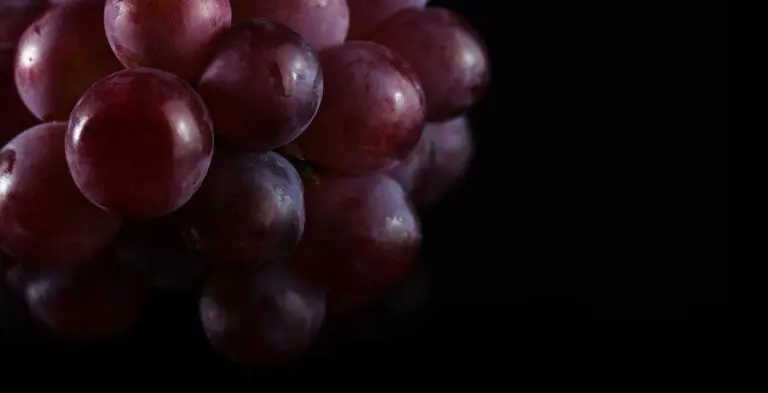
Grape varieties for port
- Touriga Nacional
- Tinta Roriz
- Tinta Barroca
- Tinta Cão
- Tinta Francisca
- Tinto Rouro
- Bastardo
- Donzelinho Tinto
- Mourisco
- Malvasia Fina (for white port)
Types of port
There is red, white and rosé port. Red and rosé port are made from black grapes, white port from white grapes. Most ports are blends (assemblages) of different years, vineyards and grape varieties. The best-known classification is ruby, tawny, vintage, white and, more recently, rosé.
With red port, maturation determines a great deal: oxygen changes the colour and aroma. More oxidation takes place in small wooden casks than in large casks or tanks. Young port is deep red (ruby). Port that has spent much longer in wood and received more oxygen becomes lighter and orange-tinged (tawny).
Ruby
The most common port. This relatively young port matures for 2 to 3 years, usually in stainless steel tanks or concrete vats and sometimes in oak casks. Ruby is a blend of several grape varieties, vintages and vineyards.
Ruby Reserva
Matures for three to five years in cask, which makes it more aromatic, fruitier and more complex.
Tawny
A blend of ports from different harvest years, named after its tawny colour. This develops because the wine matures longer in cask, usually around 3 years, oxidising slightly in the process. Tawny is lighter in colour and smoother in taste than ruby. A tawny reserva matures in cask for 5 to 7 years.
Aged Tawny
The best tawnies stay in wood for longer. The number of years is stated on the bottle, and because it is a blend, this is the average age. This age designation requires approval from the Instituto dos Vinhos do Douro e do Porto (IVDP).
Crusted
A blend of port from several vintages that has matured in wood for 3 to 4 years. It is bottled unfiltered, so a sediment (crust) forms. Like vintage port, it needs to be decanted. Also known as the ‘poor man’s vintage’.
Vintage
Port of the highest quality, from a single year’s harvest from the best vineyards. It may only bear this name after strict assessment by the IVDP. Vintage port is bottled young and then continues to mature in the bottle, sometimes for as long as 40 years, forming a deposit. The longer the bottle matures, the smoother the taste.
Late Bottled Vintage (LBV)
A port from a single harvest year that matures in oak casks for 4 to 6 years before bottling. The label states the harvest year and the year of bottling. Most LBVs are ready to drink straight away.
Single Quinta Vintage
A vintage port from a single vineyard, which is named on the bottle. These ports can also be made in years that have not been declared vintage years. The label states the harvest year and the year of bottling.
Colheita
Port from a single year’s harvest; colheita means harvest. It matures for at least 7 years in wooden casks, is tawny in colour and ready to drink as soon as it is bottled. The bottle states the harvest year and the year of bottling. Colheitas are regarded as high-quality tawnies.
Garrafeira
Also a port from a single year, sometimes called ‘the bridge between tawny and vintage’. After a short maturation in wooden casks, the wine is transferred to large glass bottles, in which it slowly continues to mature for 20 to 40 years. The sediment is removed by decanting before bottling.
White port
Made exclusively from white grapes and matured in cask for three years. The taste ranges from extra dry to very sweet. A reserva branco matures for at least 7 years and is golden and complex. In Portugal white port is often drunk with tonic: 1/3 port, 2/3 tonic and a slice of lemon.
Rosé port
Officially recognised as a type of port since 21 May 2009. Rosé port does not mature in wood, which makes it livelier, fresher and fruitier in style.
Vintage port
When is it a vintage year?
On average around three times a decade, the harvest is so good that the IVDP declares the year a vintage year. Port houses may also submit port for assessment in other years. If it meets the strict requirements, that port may also be called vintage; this is usually a Single Quinta Vintage Port. Alongside ‘Vintage’, the label always states the year.
Generally declared vintage years include: 2017, 2016, 2011, 2009, 2008, 2007, 2003, 2000, 1997, 1994, 1992, 1991, 1989, 1987, 1985, 1983, 1982, 1980, 1978, 1977, 1975, 1970, 1966, 1963, 1960, 1958, 1955, 1950, 1948, 1947 and 1945.
Drinking and opening
Drink vintage port at around 18 °C. Once opened, vintage port oxidises relatively quickly: finish the bottle within 48 hours, after which the quality noticeably declines.
Because vintage port can be kept for a very long time, the cork is sometimes in poor condition. That is what port tongs were invented for. The tongs are heated until red-hot and clamped around the neck, just below the cork, for a while. You then cool the neck with a very cold, wet cloth, after which the neck breaks exactly at the heated spot.
Serving port
It is advisable to decant port before serving so that the sediment stays behind in the bottle. Vintage port needs careful handling: stand the bottle upright for at least 24 hours before opening, so that the deposit sinks to the bottom.
Decant the port into a carafe a few hours before drinking and leave one to two glasses in the bottle, so that no deposit comes with it. The older the port, the shorter the decanting time.
A typically Portuguese custom is to refill the bottle after decanting a vintage port with a less rich ruby port, which gains more body as a result.
Decanting time by age
- 7 years or younger: 10 to 12 hours
- 8 to 15 years: 8 to 10 hours
- 16 to 25 years: 6 to 8 hours
- 26 to 35 years: 4 to 6 hours
- 36 to 45 years: 3 to 5 hours
- 46 to 60 years: 2 to 3 hours
- Older than 60 years: 1 to 3 hours