
Cognac
The prestigious spirit from France.
What is cognac?
Cognac is a spirit made by distilling white wine. Its alcohol content is 40% or higher. A spirit may only be called cognac if it meets a number of conditions:
- It has been produced in the Cognac region of France.
- It has been distilled twice.
- It has matured in oak casks for at least 2 years.
- Its alcohol content is at least 40%.
- It has been made from one of the permitted grape varieties.
The grape varieties
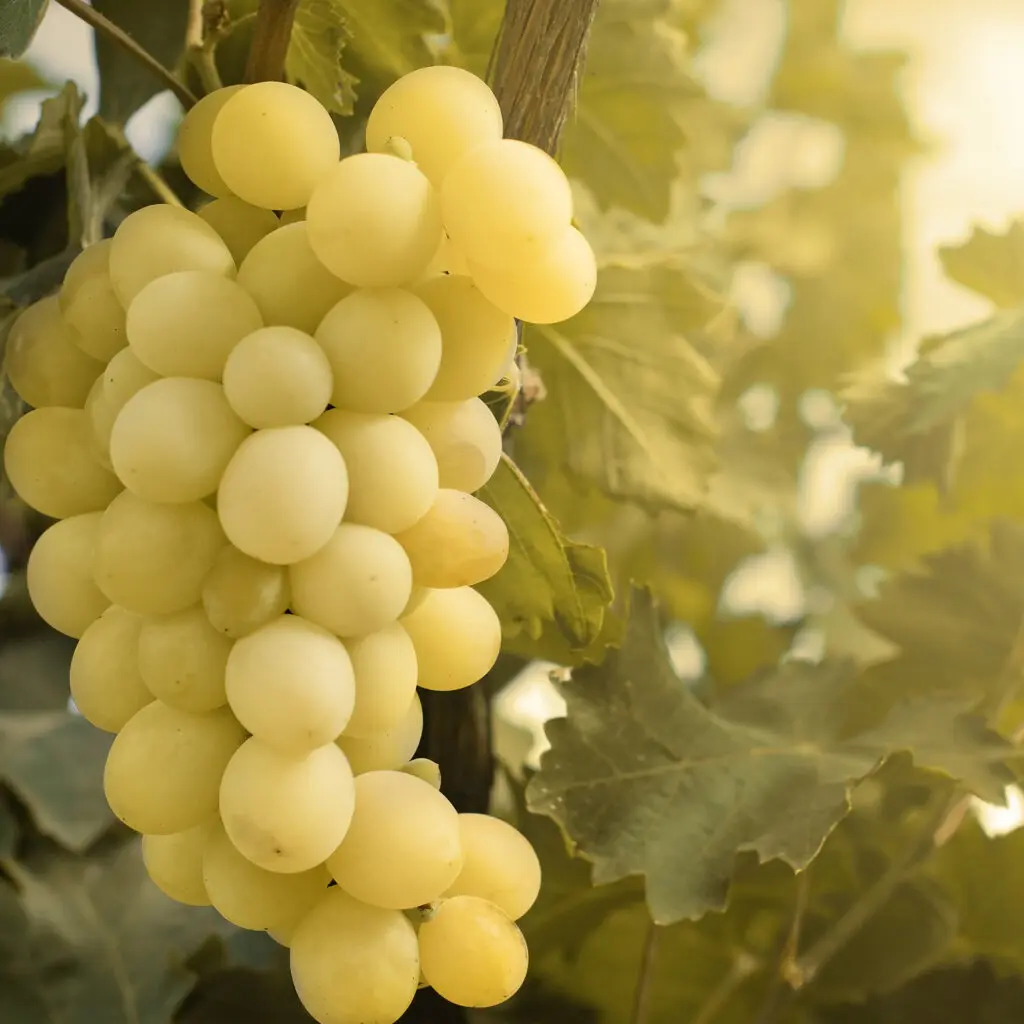
Only nine grape varieties may be used to produce cognac: Ugni Blanc, Colombard, Folle Blanche, Jurançon Blanc, Meslier Saint-François, Montils, Select, Folignan and Sémillon.
In 90% of cases Ugni Blanc is used, which is also known locally as Saint-Émilion.
Cognac designations and ages
Cognac comes onto the market under different designations, depending on its age. The count starts from the date by which distillation must be completed: 31 March. Two years later the cognac may be bottled and sold.
Originally it was forbidden by law to state the age of the cognac on the bottle. Since 1988 a vintage year may appear on the bottle, provided the producer can prove that the bottle contains only cognac from that year. Every bottle does, however, carry an age designation. The best known are:
V.S. or ***
Minimum maturation 2 years. V.S. stands for Very Special or Very Superior.
V.S.O.P., V.O. or Réserve
Minimum maturation 4 years. V.S.O.P. stands for Very Superior Old Pale or Very Special Old Pale, V.O. for Very Old.
X.O., Extra, Hors d’Âge
Minimum maturation 10 years. X.O. stands for Extra Old. The designation Napoléon (at least 6 years) has nothing to do with the famous emperor.
The age on the label is that of the youngest cognac in the blend. An X.O. label can therefore appear on a bottle whose blend is on average 10 years old as well as on one averaging 50 years. Some producers use their own system to indicate age, for example a number or a number of ducats.
The Cognac region
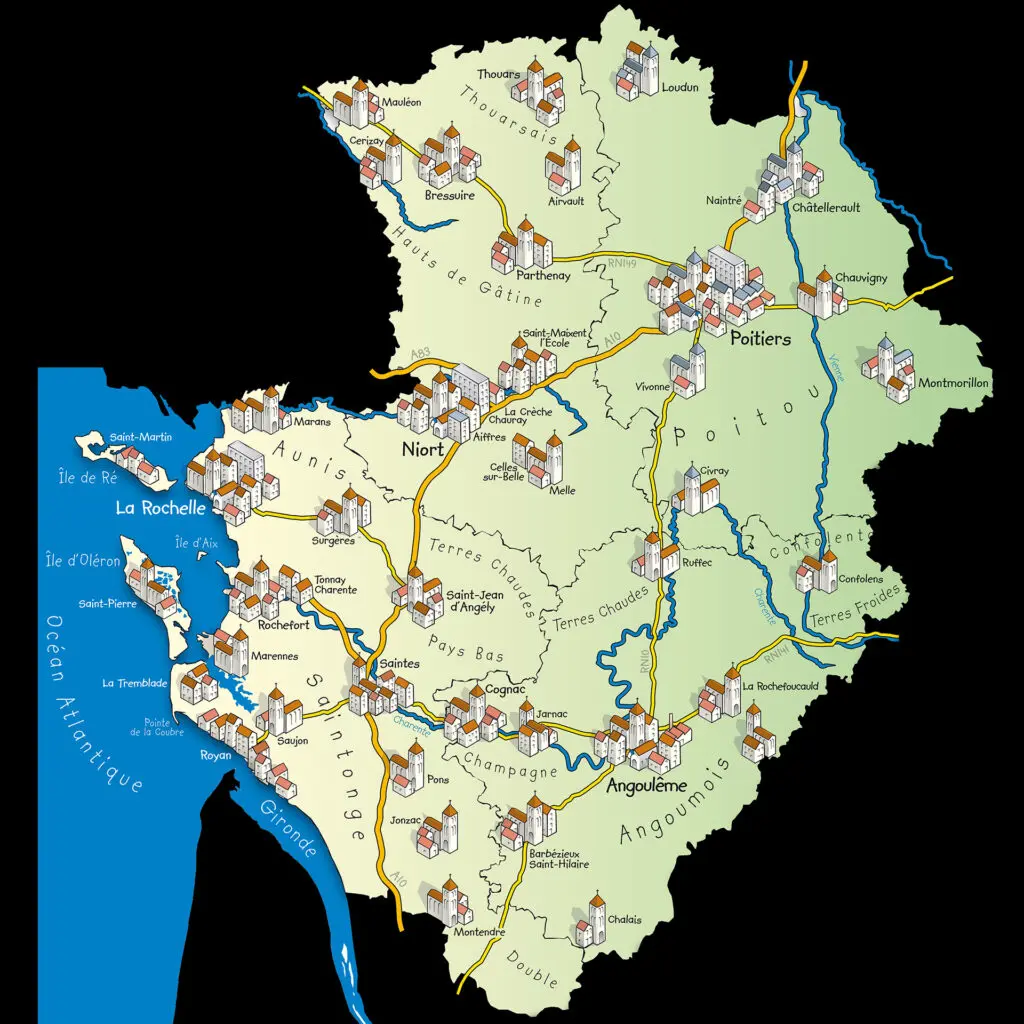
The Cognac region is divided into six districts, each with its own characteristics. The more chalky the soil, the more refined the cognac.
Grande Champagne
Grande Champagne lies at the heart of the Cognac region and has the chalkiest soil. This is where the highest-quality cognac comes from.
Petite Champagne
Cognac from Grande and Petite Champagne together may be called ‘Fine Champagne Cognac’, provided at least 50% comes from Grande Champagne. Rémy Martin is the only major cognac house that uses grapes exclusively from these two finest crus.
Borderies, Fins Bois, Bons Bois and Bois Ordinaires
Cognacs from different districts are usually blended, so that the blend combines the best qualities of each district. By far the majority of cognacs come from more than two districts; the label may then only say ‘Cognac’. The most refined cognacs are often made by smaller, specialist producers.
Cognac production
Cognac is made in four stages: from grape to wine, from wine to eau-de-vie, maturation in oak casks and finally blending and bottling. Freshly distilled cognac is colourless; the deep amber colour and the smooth, rounded taste of an older cognac come from the wood of the cask. Once cognac has been bottled, it no longer ages.
1. Fermentation
The grapes are pressed immediately after harvest and fermented in 5 to 7 days into a sour, cloudy wine of 8 to 10% alcohol. Natural fermentation is sometimes helped along with dried yeast. The heaviest particles sink to the bottom; this sediment is sometimes used later during distillation.
2. Distillation
The wine is distilled in a copper alambic charentais. The first distillation (première chauffe) produces a spirit of around 30%. After the second distillation (bonne chauffe) the eau-de-vie has an alcohol content of around 70%.
3. Maturation
The eau-de-vie matures in casks of oak from the Limousin or Tronçais. The tannin in the wood and the humidity of the cellar help determine the taste. During maturation part of the spirit evaporates: the ‘angels’ share’.
4. Blending and bottling
Only eau-de-vie that has matured in cask for at least 2 years may be called cognac. Virtually every bottle is a blend of cognacs from different years and districts. Before bottling, the cognac is diluted with water, usually to 40%; sugar or caramel is sometimes added to young cognac.
History of cognac
Cognac dates back to the 17th century. By then Dutch ships had been calling at the Charente coast for decades, where the crews liked to stock up on French wine to take home. Because that wine lost quality during the long voyage, demand grew for distilled wine (brandewijn), which kept for longer. At the end of the 17th century the people of the Charente developed a spirit that was distilled twice. The town of Cognac has lent its name to this spirit ever since.
Consumers soon discovered that the brandy from the Cognac region was better than that from other regions, and were willing to pay more for it. The Dutch strengthened their interests in the region and supplied their best cognac mainly to the English aristocracy. Because cognac remained primarily an export product, many young foreigners settled in the region. They often married into the local community, which can still be seen in the names of many well-known cognac houses.
At the end of the 18th century the cognac houses Martell and Hennessy gained control of most of the cognac trade. That remained the case until smaller companies managed to win a share of the market some 150 years later.
At the end of the 19th century the industry suffered from overproduction and sharply falling prices. Then phylloxera destroyed 85% of the vines in the space of 16 years. The industry was saved by grafting the existing varieties onto American rootstocks that are resistant to phylloxera. In the process there was a large-scale switch from Folle Blanche to Ugni Blanc.
Once the plague was under control, there was growing demand for stricter protection and definition of cognac. In 1909 the origin of cognac was laid down by law, and Cognac later received an Appellation d’Origine Contrôlée. Even before the First World War, cognac won back England as its most important market, and from there the colonies.
After a further decline caused by the two world wars, demand rose again and the BNIC (Bureau National Interprofessionnel du Cognac) was founded to protect the quality and reputation of cognac. Since 1997 demand has been rising once more, partly because well-known African American artists have linked their names to cognac. Demand for superior cognac is also growing in Asia.
The difference between cognac and brandy
Distilled wine that does not come from the Cognac region but is made elsewhere in the world is generally called brandy. The word brandy is an English corruption of the Dutch brandewijn. Brandy is also the collective name for all wine distillates, so cognac and armagnac fall under it too.
Cognac comes exclusively from the Cognac region, which lies mainly in the French departments of Charente and Charente-Maritime. Armagnac comes from an area to the south of it, south-east of Bordeaux, mainly in the department of Gers. That area is divided into Bas-Armagnac, Ténarèze and Haut-Armagnac.