
Tasting whisky
Learn how to taste whisky
The art of tasting is one you can master. And it is simply a matter of getting started. We realise that the terms used to describe whisky can sometimes be a little intimidating. That is why we are happy to guide you through a pastime that becomes more and more interesting the more you taste.
The more whisky you taste, the easier it becomes. Especially if you have information about the whisky in question to hand while you taste. Read the background and make your own notes, and you will immediately notice how easily you become part of the world behind this wonderful drink. Nothing is more enjoyable than tasting, discovering and learning.
We give you a number of beginner’s tips and all the commonly used terms in the world of whisky. You don’t need to learn them by heart, but you will find that these terms are rather handy for describing a whisky for yourself.
The golden rule
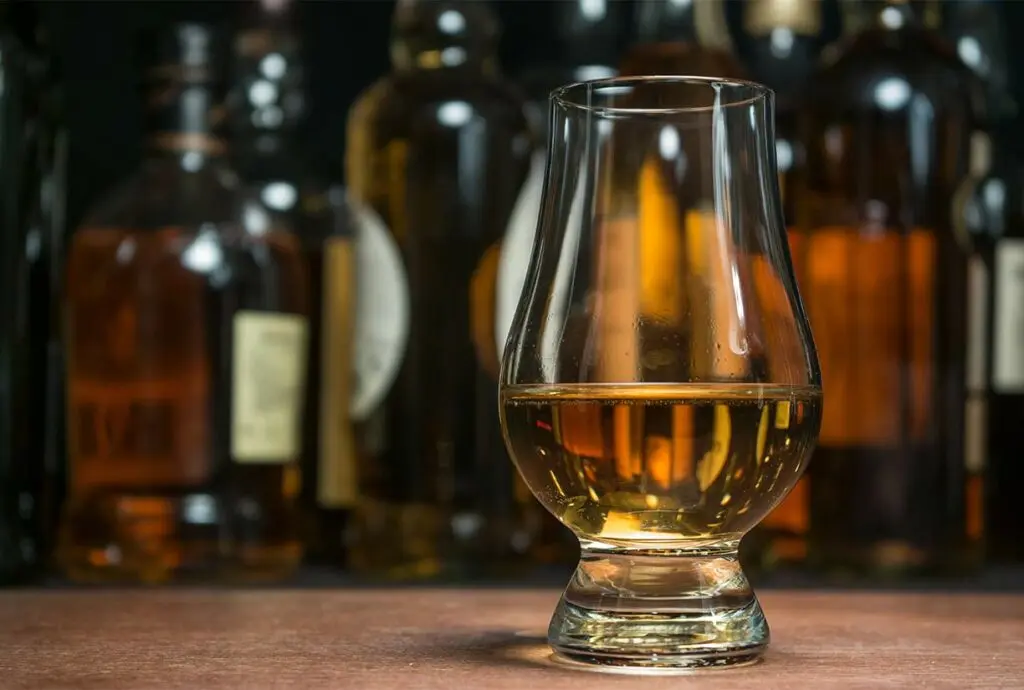
The golden rule when tasting whisky is that taste is, above all, very personal. What you yourself taste and how you judge it is what matters. If you taste together with another enthusiast, it is fun and instructive to exchange your tasting experiences.
Taste slowly
Whisky is a special drink that should be tasted slowly. Give yourself time to let the characteristics of the whisky gradually reveal themselves. You will notice that with most whiskies your first sip is very different from the second, and the third, after a while, different again from the second.
Whisky glasses
Snifter
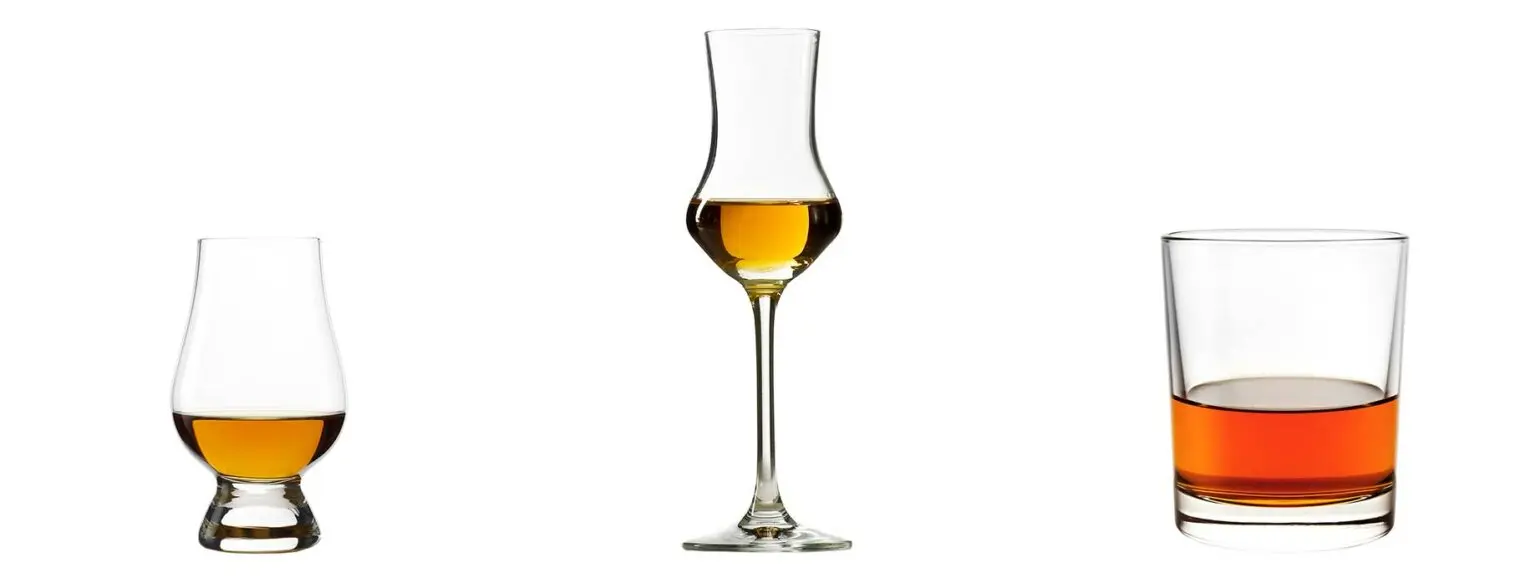
There is one type of glass suited to tasting whisky properly: the snifter. This type of glass is designed to guide the aromas better towards the nose; after all, the nose is a very important factor in tasting. This glass is tulip-shaped, with a wide base that narrows towards the rim.
Tumbler
A tumbler, a wide glass with a thick base and no narrowing, is less suitable for tasting, because the aromas can disperse quickly. So preferably use a tumbler only when you simply want to enjoy a glass of whisky.
Nose, palate and finish
1. The nose
The nose of a whisky is the aroma you smell. The aromas give an indication of how the whisky will taste. Pour the tube of whisky into your glass and let it swirl around with a small circular movement of the wrist, which adds oxygen and allows evaporation to begin. This is important because until then the whisky has been ‘trapped’ in the cask or bottle. Then let the whisky settle in the glass for a few moments and warm the glass slightly by holding it in the palm of your hand. If you smell it straight away, in many cases you will notice an unpleasant smell of alcohol or acetone. In the meantime, pay attention to the colour of the whisky.
Put your nose in the glass, literally, and breathe in the aromas. Do this three times and try to identify the aromas: light, fresh, heavy, full, fruity, floral, spicy, smoky, peaty. Your first sniff is full of alcohol, the second is sweeter and fruitier and the third gives off a smoky warmth. Feel free to try to predict the taste of the whisky on this basis.
2. The palate
The taste, or palate, is registered by the taste buds on your tongue. It is very important not to drink the whisky too quickly. Hold it in your mouth for a moment to let the flavour move around properly. Different parts of the tongue and mouth respond to different flavours and characteristics of the whisky.
Now try to taste the characteristics and describe them for yourself in your own tasting notes. Take another sip a little later and try to discover new things. Don’t worry if you taste something someone else doesn’t, or vice versa. After all, our taste buds are all different.
3. The finish
The finish is the taste that remains in the mouth after you swallow the whisky. You will discover that the complexity of the finish is what sets whisky apart from other spirits.
Try to discover and describe as many flavours as possible, and compare them with flavours you know. With the finish, also ask yourself whether it is short, medium or long.
Adding water or ice?
Adding water or ice can affect the whisky both positively and negatively. Most whiskies with an alcohol content between 40% and 45% have already had some water added through a process known as cutting. This is done before bottling, to tailor the taste to a wider group of consumers. This cutting is usually done with natural water from near the distillery.
Water in whisky
By adding a very small amount of water, a whole host of new characteristics can suddenly burst out of a whisky that you would not have tasted in the neat whisky. This is certainly the case with cask strength whiskies or whiskies with an alcohol content above 60%. The high alcohol content holds back the more subtle flavours. A little water tames the alcohol somewhat, allowing the flavours to come into their own. Exactly how much water you add depends on your personal taste. Here too, feel free to experiment.
Ice in whisky
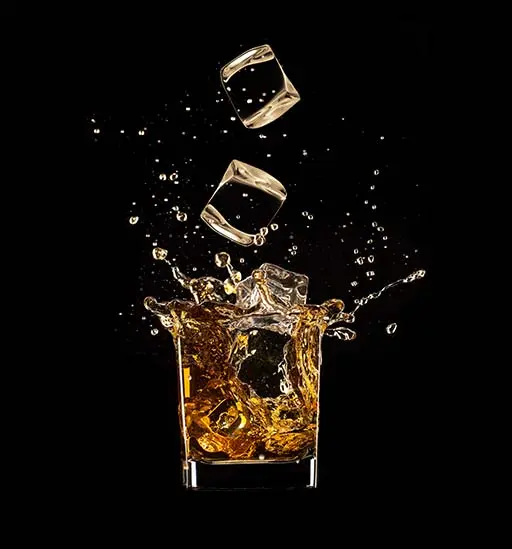
Adding ice is highly controversial. Some connoisseurs feel it is simply not done, but in the United States it is customary to drink whisky on the rocks. The difference with water is that ice immediately lowers the temperature in your glass and stops the whisky from showing its special character. It also dilutes your whisky.
Rather than bringing out the flavours, ice tends to mask them, just as with a good white wine served too cold. It is of course more refreshing, but the taste becomes rather dull. Only once the ice has melted and the whisky warms up again does the flavour revive a little, but by then the dram is already too diluted to show its best. For tasting, we therefore recommend not using ice.
Whisky stones
There is an alternative to ice cubes if you want to avoid diluting the whisky too much: whisky stones. These are stones shaped like ice cubes, which you can rinse and reuse.
Although these stones do not dilute your dram, they cool the whisky so much that a good deal of flavour is lost. The whisky only truly comes into its own as it slowly warms up again. So for tasting, we advise against whisky stones too.
Conclusion
Our advice is always to taste a whisky first in its natural form, without additions (straight or neat). Some whisky connoisseurs feel you shouldn’t add water either, because you ought to taste the whisky as the distillery originally made it, in all its natural beauty and complexity. However, a little water can help bring out even more flavours and complexity, especially in a whisky with a high alcohol content, such as a cask strength.
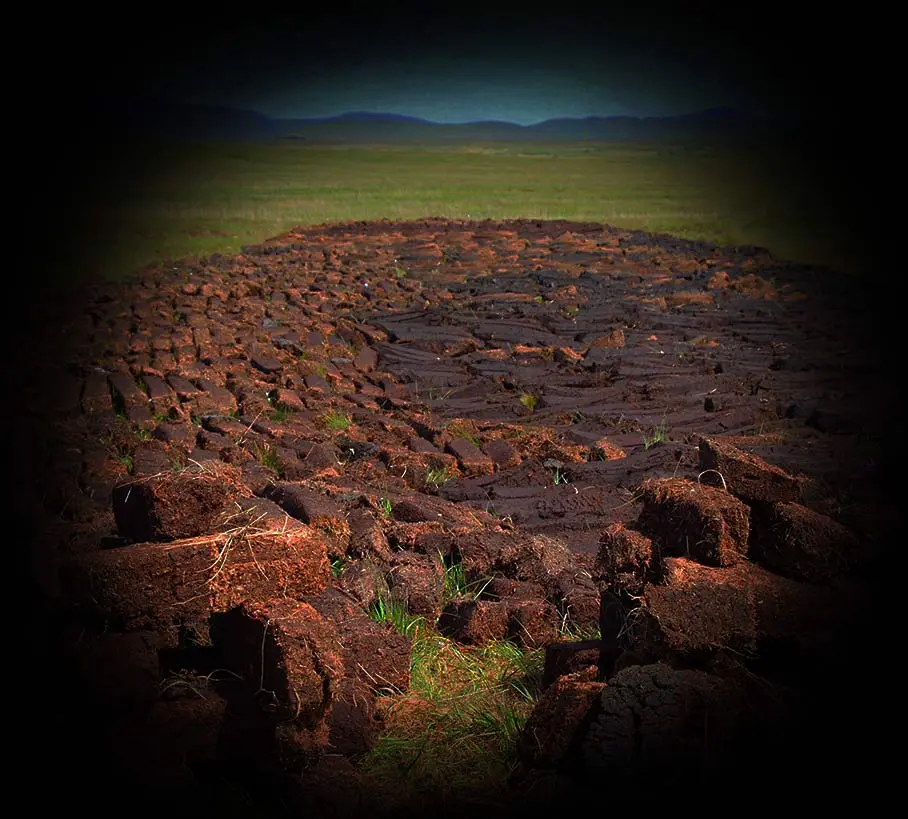
Peat
Peat is found almost everywhere in the British Isles, and its use in the production of most Scotch whiskies gives them that unique, smoky taste. Peat is soil made up of grasses, mosses, branches and roots that have been compressed in the ground over the centuries.
How it is used
The extracted peat is cut (usually by hand) and left to dry for about two weeks. It is then taken to the nearby distillery. The peat usually comes from land owned by the distillery itself. The peat is burned beneath the barley to turn it into malt. Because peat is so compact, it burns for a very long time with a constant temperature and smoke.
Phenols
The use of peat is one of the reasons why whiskies taste so different. Peat smoke contains chemicals (phenols) that are absorbed by the barley during malting. The amount of phenols is determined by how long the barley was exposed to the smoke, how much smoke was released during burning and, of course, the type of peat used.
When the malt leaves the kiln, the amount of phenols is measured and expressed in PPM (parts per million). A distillery always aims for the same PPM in its malt. The PPM is also measured in the end product: the higher the PPM, the smokier the whisky tastes.
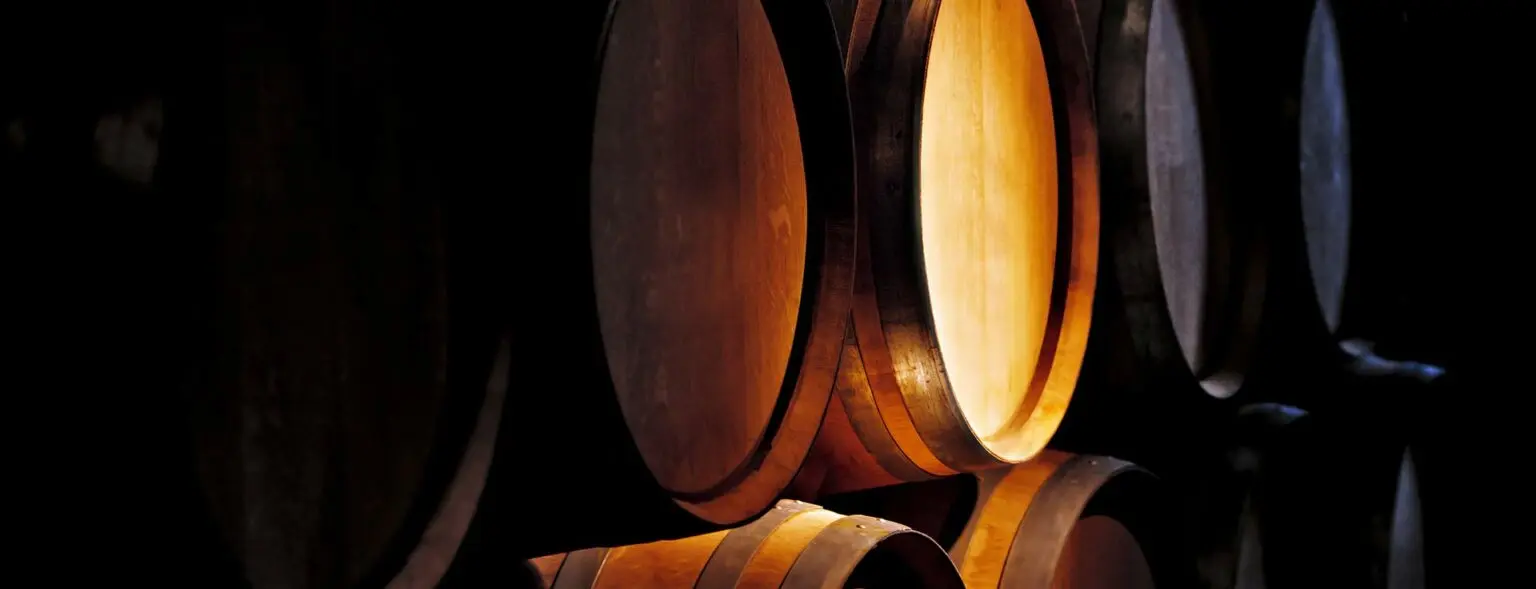
The influence of wood on whisky
The oak barrel or cask in which the whisky has matured also influences its taste. That these casks must be made of oak is laid down by law. Oak is strong, yet has a structure that prevents leaks. It is porous, so oxygen can move in and out of the cask. And the wood can be bent by heating without breaking, which is important when making casks.
Wood is full of natural oils known as vanillins. During maturation the spirit draws these vanillins out of the cask, as it were, and so they help shape the complex taste of the whisky. Three types of wood are currently used, each with its own characteristics.
European oak
This type of oak (Quercus robur) has been used for more than two hundred years to mature Scotch whisky and Irish whiskey. The first casks were made from English and Scottish oak, but because this local tree grows so slowly, Russian oak was soon used instead.
From 1860 the British began importing sherry from Spain. The Spanish oak casks in which the sherry had matured were comparable but a good deal cheaper. Today more and more French oak is used. These casks are traditionally used to mature wine and give the whisky a special finish.
Typical flavours: sherry, dried fruit (raisins), spices (cinnamon, nutmeg), caramel, orange.
American oak
This type of oak (Quercus alba) has only been used since the end of the Second World War. After Prohibition in the 1920s and ’30s, a law was introduced to revive the cooperage industry, and the Irish and Scots also began using bourbon casks.
American oak grows quickly, with a dead-straight trunk and a high vanillin content. The typical American cask, the ASB (American Standard Barrel), has an ideal ratio between the amount of spirit and the inner surface of the cask. The result: almost 90% of all whiskies worldwide mature in American oak bourbon barrels.
Typical flavours: vanilla, honey, nuts (coconut, almond, hazelnut), caramel and spices.
Japanese oak
This type of oak (Quercus mongolica), better known as Mizunara oak, has been used in the Japanese whisky industry since 1930. Mizunara has a particularly high vanillin content, but is soft and very porous. The wood can leak and is easily damaged.
That is why, in Japan too, whisky usually matures in bourbon or sherry casks and only moves to Mizunara casks at the end of maturation for their distinctive flavour.
Typical flavours: vanilla, honey, flowers, blossom, fresh fruit (pears, apples), spices (nutmeg, pepper), wood.
Types of whisky cask
A bottle of whisky may state the type of cask in which it has matured. The rule is: the smaller the cask, the more the maturing spirit comes into contact with the wood, and so the greater the influence of the natural oils, the vanillins. The most commonly used casks are the American Standard Barrel and the butt.
Blood Tub
40 litres
The blood tub is mainly used in brewing beer, but very occasionally also for maturing whisky, for example for special editions.
Quarter Cask
50 litres
A cask a quarter the size of an ASB. Thanks to the large contact between spirit and wood, the whisky takes on its flavour quickly. Sometimes also called a firkin.
American Standard Barrel
200 litres
The ASB is the ‘modern’ whisky cask of American oak, easy to use thanks to its capacity. Mainly used in the bourbon industry, but also often for Scotch and Irish spirit.
Hogshead
225 litres
Derived from the 15th-century English hogges hede, 63 gallons. The forerunner of the ASB and perhaps still the most widely used cask for maturing whisky.
Barrique
300 litres
Mainly used in the wine industry. The big difference from whisky casks is that these are bound with wooden strips instead of metal hoops. Gives the whisky a wine cask finish.
Puncheon
500 litres
Made of American or Spanish oak and used in the rum and sherry industries. Used to give whisky its finish.
Butt
500 litres
A tall, narrow cask of sturdy European oak, mainly used in the Spanish sherry industry. The most common sherry cask for maturing whisky.
Port Pipe
650 litres
Also a tall, narrow cask of sturdy European oak, which looks like a stretched barrel. Used for maturing port and then to give whisky its finish.
Madeira Drum
650 litres
A short, round cask with a wide diameter, made of French oak. Mainly used in the Madeira wine industry and sometimes to give whisky its finish.
Gorda
700 litres
An enormous cask from the American whisky industry. Sometimes used for maturation, but mainly for combining (marrying) whiskies into a blended or vatted whisky.
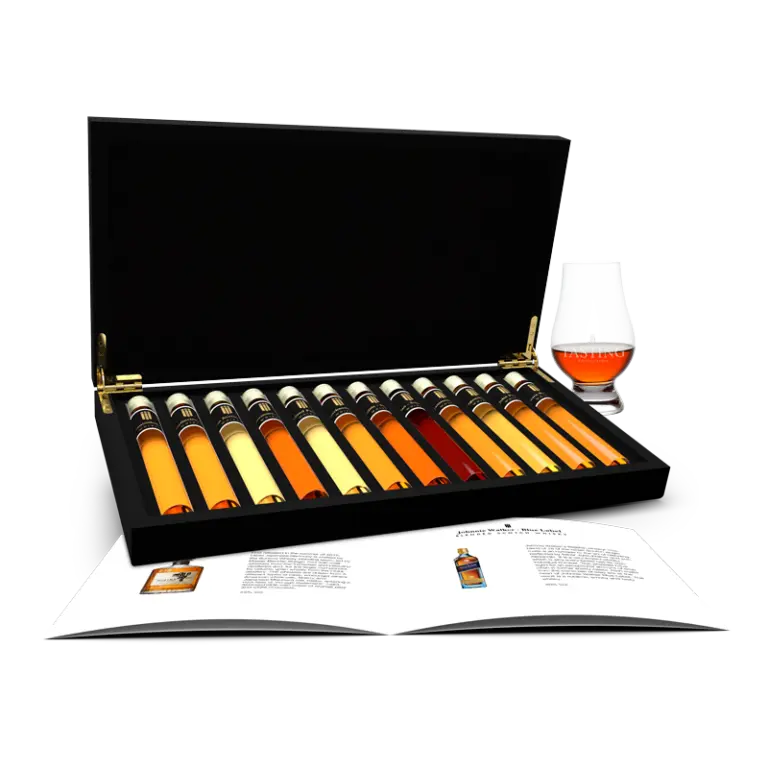
Whisky Tasting Collection
The best way to taste whisky is, of course, by ordering a Whisky Tasting Collection. Try them all and discover which whisky you like best!