
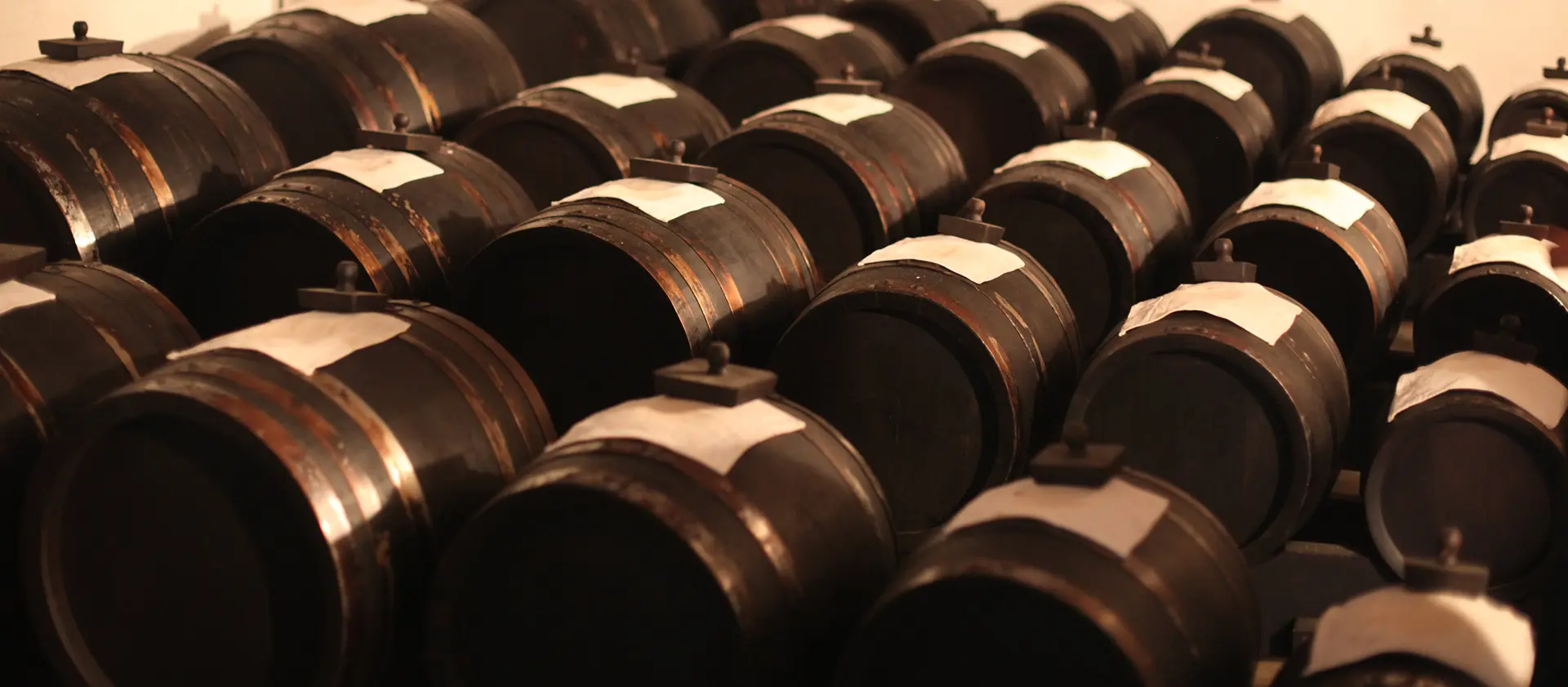
Balsamico
The black gold of Italy.
What is balsamico?
It is not for nothing that aceto balsamico is called the black gold of Italy. Balsamic vinegar literally means ‘balsam-like vinegar’. There are three types of balsamic vinegar:
- The real, traditional balsamic vinegar: Aceto Balsamico Tradizionale
- Derived products: condimento balsamico, salsa balsamica or salsa di mosto cotto
- The ‘ordinary’, often industrial balsamic vinegar, which is sometimes no more than a poor imitation
Aceto Balsamico Tradizionale
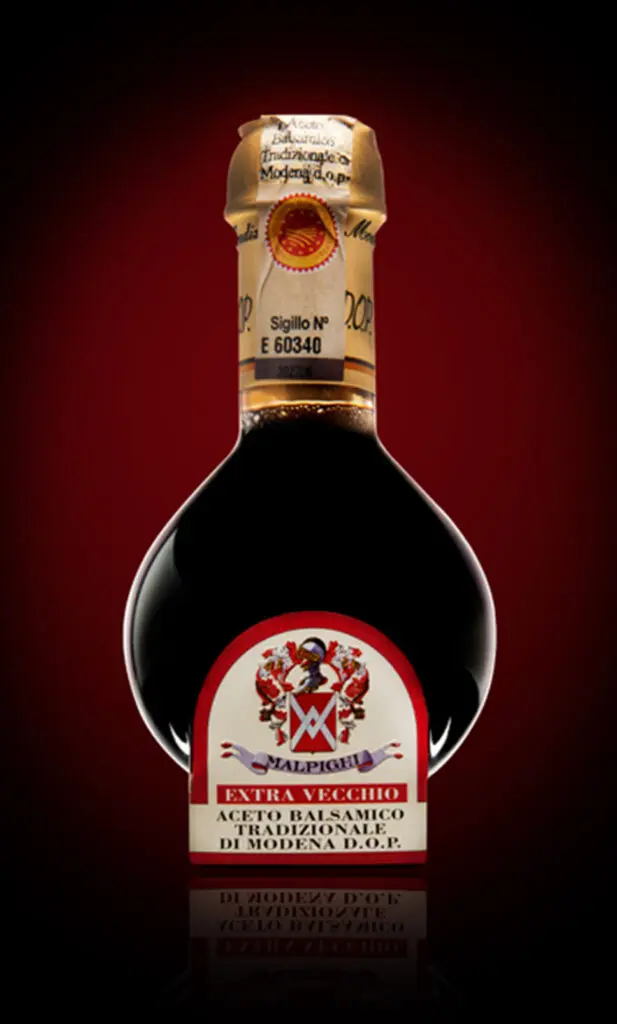
The real, traditional Aceto Balsamico Tradizionale has been made since the Middle Ages in Modena and nearby Reggio Emilia, in the Emilia-Romagna region of northern Italy. The names Aceto Balsamico Tradizionale di Modena and Aceto Balsamico Tradizionale di Reggio Emilia are protected, both in Italy (Denominazione di Origine Protetta, DOP) and in the European Union (Protected Designation of Origin).
The quality of the balsamic vinegar is checked by two consortia (consorzi), one for each area. The vinegar is then transferred into a 100 ml bottle. Within each area, the shape of the bottle is the same for all producers, as is the consortium’s legally protected seal of quality. Only the label may be designed by the producer.
The cap or the label tells you the minimum time the balsamico has matured:
Modena
- Cream-coloured cap: matured for at least 12 years
- Gold cap: matured for at least 25 years, with the additional designation extravecchio (extra old)
Reggio Emilia
- Red label: matured for at least 12 years
- Silver label: matured for at least 18 years
- Gold label: matured for at least 25 years
The production process
Aceto Balsamico Tradizionale DOP is produced exclusively in Modena and neighbouring Reggio Emilia. It is made from cooked-down must of late-harvested Trebbiano grapes. Because they are picked late, the grapes are overripe and full of sugars. No herbs or other flavourings are added.
Traditionally, the pressed grapes are heated over a low fire, evaporating 30 to 70% of the liquid. What remains is a thick syrup, also known as concentrate.
This concentrate then matures for years in wooden casks according to the so-called solera system, which makes the flavour ever more intense. The result is a vinegar with a highly complex taste.
Ever smaller casks
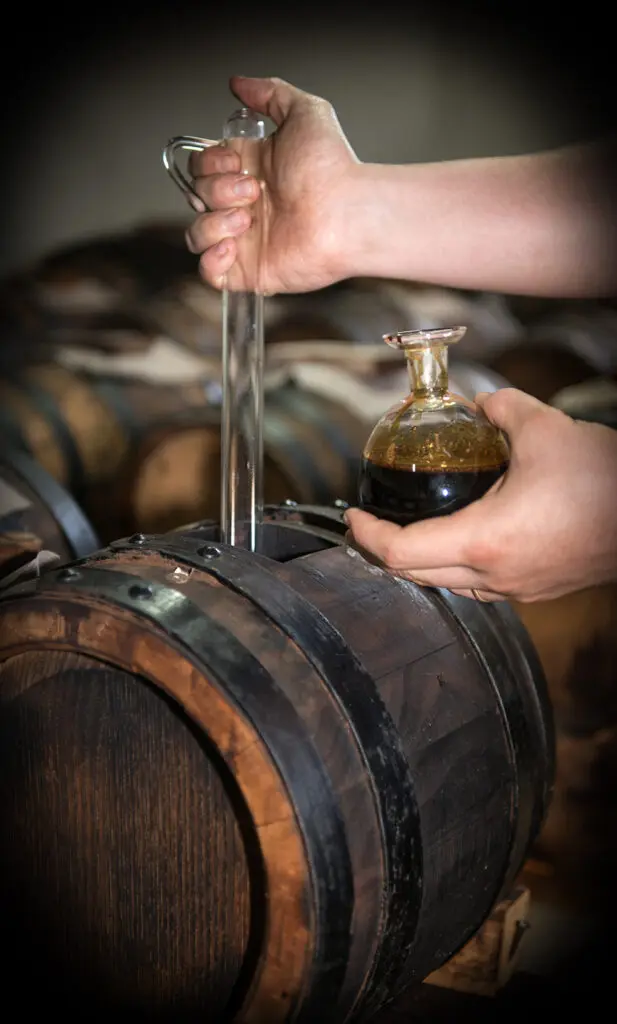
To improve the flavour, the balsamico is regularly transferred to another cask. As it matures, it moves into ever smaller casks, each of a different wood. The wood helps determine the final aroma.
Maturation usually begins in casks of mulberry wood. Halfway through, the balsamico moves to smaller casks of chestnut or cherry wood, and the last part of the maturation takes place in casks of ash and oak.
Drawn once a year
Once a year, 10 to 15 litres of balsamico are drawn from the smallest cask. This is topped up with balsamico from the second-smallest cask. And so it goes on, cask by cask, up to the largest cask, which is topped up again with freshly cooked-down syrup.
Maturing in the attic
Unlike wine casks, the casks are not kept in a cellar but in the attic. This way the balsamico is constantly exposed to temperature changes as it matures, and that is what creates its complex flavour.
This entire process is an absolute requirement for the name Aceto Balsamico Tradizionale. Maturation takes at least 12 years and can last as long as 25 years.
Products derived from balsamico
Because traditional balsamic vinegar is very expensive, alternatives have come onto the market. Their quality varies enormously.
Condimento balsamico
Also called salsa balsamica or salsa di mosto cotto. These products often partly contain traditional balsamic vinegar, or are made in a similar way. But usually the balsamico has matured for less than 12 years, the grapes come from another region or the vinegar has been mixed with ordinary vinegar.
Aceto Balsamico di Modena
The ‘ordinary’, commercial balsamic vinegar only has to mature for 60 days and only has to consist of 20% must. The rest may be ordinary wine vinegar, and flavourings such as caramel may be added. Despite the name, the grapes do not have to come from Modena.
The result is a watery, strongly sweet-and-sour balsamico. Fine for a salad dressing, but you will get far more enjoyment from real balsamic vinegar.
How to recognise a good balsamico
The tradizionale is without exception a top product. With other balsamicos it is sometimes hard to separate the wheat from the chaff. The price is a good indication, but does not tell you everything. So look out for the following points.
The taste
A good balsamic vinegar does not taste too sour, but mellow: sweet and sour are well balanced.
The percentage of must
The higher the percentage, the better the quality. Is the percentage not stated? Then look at the order on the label: ingredients are listed in order of quantity. If wine vinegar comes before must, there is relatively little must in it. The other way round is better.
The maturation time
The older the balsamico, the more syrupy and therefore the more expensive it is. The maturation time is usually not stated on the label, but sometimes it does say how much the product has been reduced.
Additives
If it contains additives such as caramel, you are dealing with an industrial balsamic vinegar.
Balsamico Tasting Collection
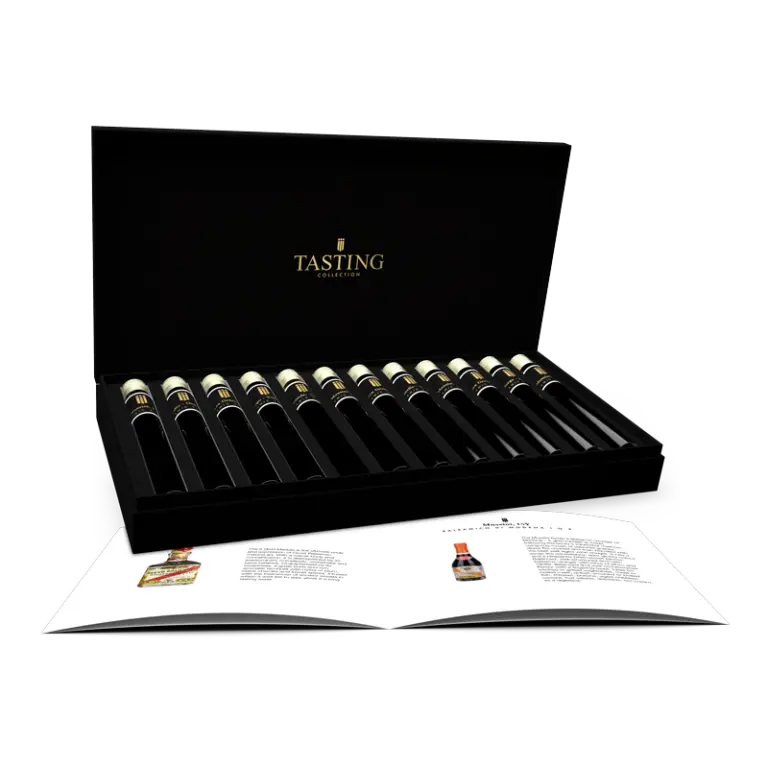
Has this got you excited and do you want to taste the finest balsamicos? Then order a Balsamico Tasting Collection. Try them all and discover which balsamico you like best!