

Vodka
One of the most popular spirits in the world.
What is vodka?
Vodka is a crowd favourite, loved by men and women alike. In bars, clubs and nightclubs, vodka mixed drinks are, alongside beer, the most frequently ordered drinks. New brands and variants keep coming onto the market.
Three types of vodka can be distinguished: Eastern European vodka, Western vodka and flavoured vodka. The difference between East and West is fading, though: more and more neutral vodkas come from Eastern Europe, while many premium brands from the West actually give their vodka a more pronounced taste.
Eastern European vodka
From Poland, Russia and the Baltic states. Generally shows more flavour characteristics of the raw material used.
Western vodka
From Western Europe and the United States. Aims above all for a spirit that is as neutral and pure as possible.
Flavoured vodka
Vodka to which a flavour has been added, for example of fruit or herbs.
Premium vodka
In all three categories, growth lies mainly in the premium segment; standard vodka has hit its ceiling. New brands are appearing from countries where vodka has its origins, such as Poland, Estonia, Russia and Ukraine. These are often modern wheat vodkas, but vodka made from potatoes or rye also has its devotees.
The success of premium brands such as Grey Goose (France), Belvedere (Poland), Ketel One (the Netherlands) and Absolut (Sweden) is increasingly being followed. Premium brands work hard on an exclusive image and take great care over the selection of ingredients, the distillation method and the filtering techniques. Variants such as single malt vodka, vintage vodka (with a year), single estate vodka and organic vodka fit this trend.
A distinction is increasingly being made between premium, super-premium and ultra-premium. This also points to a new trend: a growing group drinks the better vodkas neat or on the rocks, to enjoy more of the taste of the vodka itself.
Vodka in figures
Internationally, vodka is by far the biggest spirit. In 2005, 4.5 billion litres of vodka were drunk worldwide, a fifth of all spirits.
That is almost five times as much as rum and brandy (excluding cognac and armagnac), each of which stood at around 1 billion litres. In fourth place was Scotch whisky with 0.7 billion litres.
Between 2001 and 2005 vodka consumption grew by 18%. Growth of 4.5% was expected for 2005 to 2010.
Source: International Wine and Spirit Record
The history of vodka
Vodka, ‘little water’ in the Slavic languages, is probably the oldest spirit in the world. Russia and Poland both claim to have been first. Spirits were already being made in both countries in the eighth and ninth centuries, but it is debatable whether these can be called vodka. The first written evidence of ‘real’ vodka comes from Poland, from 1405.
Distillation techniques were still primitive at the time. The drink was mixed with fruit and herbs to disguise its harsh taste and had an alcohol content of only 14 per cent. Purifying vodka by filtering it through activated carbon, a special kind of charcoal, only came into fashion in the nineteenth century.
Distilling became known in Europe at the end of the Middle Ages. People discovered that when heated, alcohol evaporates faster than water. The collected vapour was cooled into a liquid with a higher alcohol content: a distillate. People then began experimenting with alcohol from all kinds of raw materials, such as grain and sugar cane. In Eastern Europe the technique was probably spread by monks.
In Russia and Poland vodka soon became a sought-after drink among all levels of society. Around 1700 some cities had as many as 500 vodka distilleries. The more often vodka is distilled, the purer it is.
After the Russian Revolution of 1917 the distilleries became state property. Many vodka producers fled abroad, including the famous Smirnoff family. Before the revolution they had owned the largest distillery in Moscow and supplied vodka to the tsar. After the Second World War vodka became increasingly popular, especially in Russia, Eastern Europe and Scandinavia. In 2006 Smirnoff was even the best-selling drinks brand in the world.
That same year, research showed that no fewer than 2.5 million Russians were addicted to the drink. The Russian government then raised the minimum price of half a litre of vodka. With the Schnellhardt compromise, the European Parliament decided that vodka may be made from various raw materials, as long as the raw material is stated on the label if it is not grain or potato. As a result, American and Russian variants in particular may still be sold as vodka in the European Union.
The vodka production process
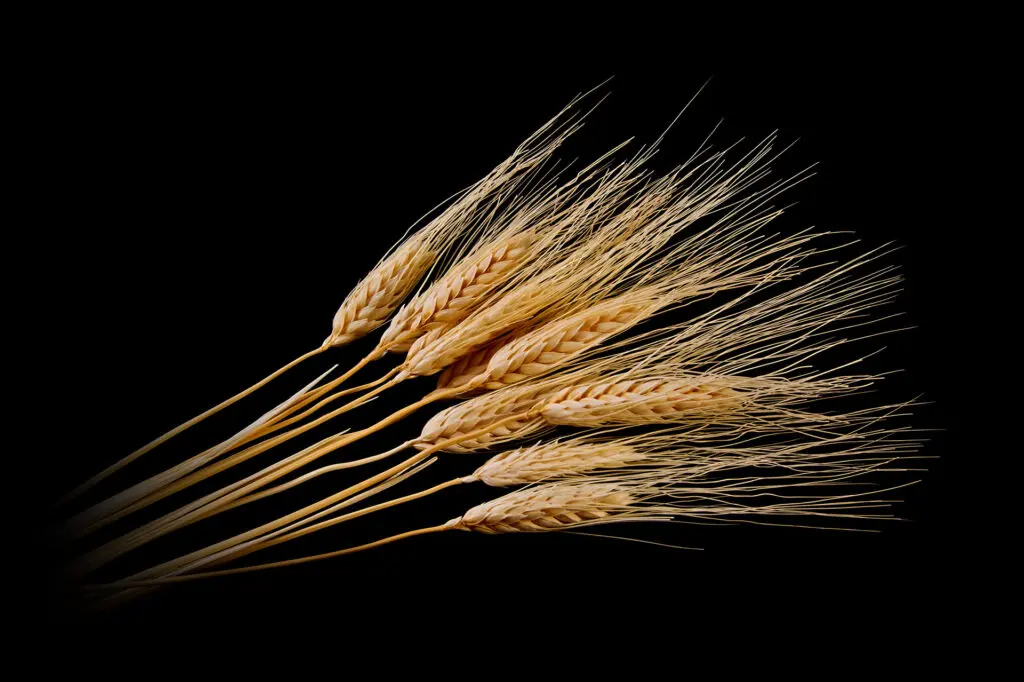
Vodka is distilled from grains such as wheat, barley and rye, or from potatoes, among other things. Unlike most other spirits, vodka does not mature: after filtering it goes straight into the bottle. In the end, most vodka contains almost nothing but ethanol and water.
1. Raw material
The grain is made to germinate, which converts the starch into fermentable sugars.
2. Fermentation
With water, this is fermented into a lightly alcoholic liquid.
3. Distillation
The liquid is distilled into a very pure alcohol of at least 96%.
4. Filtering and diluting
The alcohol is often filtered through charcoal, which absorbs odours and impurities, and diluted with water to at least 37.5%. Most vodkas on the market are 40% to 45%.
Vodka and cocktails
Vodka lends itself perfectly to cocktails. Well-known vodka cocktails include:
- Bloody Mary
- Caipiroska
- Cosmopolitan
- Gold Digger
- Moscow Mule
- Sea Breeze
- Screwdriver
- Vodka Daisy
- Vodka Lime
Vodka and cooking
Vodka is also ideal for a marinade for meat, such as steak or beef tenderloin. Mix one part olive oil and one part vodka with salt, pepper, chopped parsley, thyme and a few cloves of garlic. Leave the meat to marinate in this for a few hours at room temperature, then cook it the way you usually would.
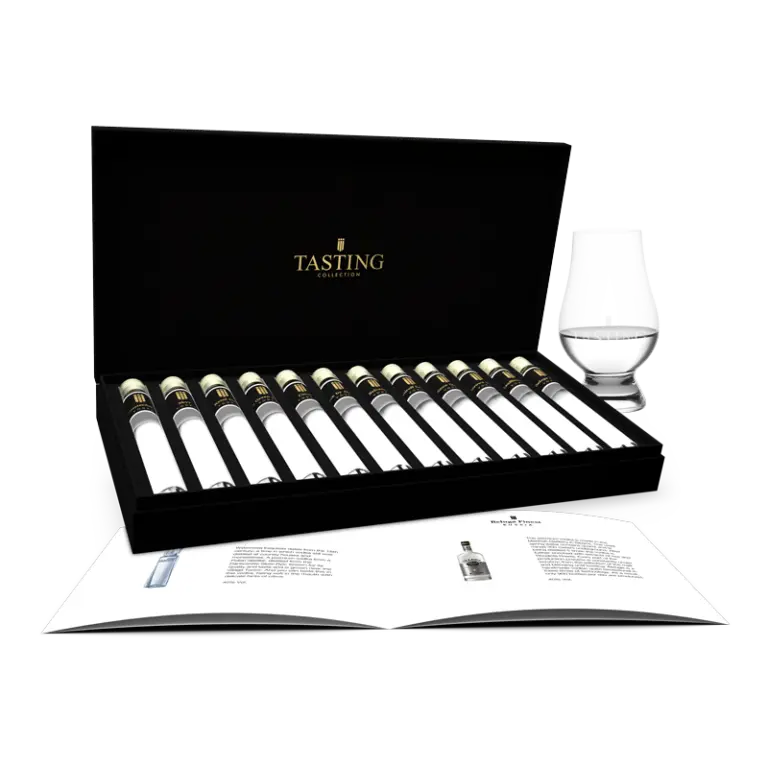
Vodka Tasting Collection
Has this got you excited and do you want to taste the finest vodkas? Then order a Vodka Tasting Collection. Try them all and discover which vodka you like best!